Hurt Laws in Pakistan Under PPC – A Complete Legal Guide (2026)
Under the Pakistan Penal Code, 'Hurt' encompasses everything from minor bruises to permanent organ loss. This definitive guide by Chief Atta Ullah Baloch explains every section—from Itlaf-i-Udw to Shajjah, Jurh to Medical Examination—with punishments, bail provisions, and expert defence strategies.
⚡ Facing a Hurt Case? Get Immediate Legal Help Now
📞 WhatsApp for Legal HelpHurt laws in Pakistan are not merely a collection of penal provisions—they are the legal backbone of every physical assault, brawl, or accidental injury case that enters a courtroom. Governed primarily by Sections 332 to 337-L of the Pakistan Penal Code (PPC) and reshaped by the Qisas and Diyat Ordinance, 1990, these laws replaced the colonial-era injury classifications with Islamic jurisprudential concepts of Qisas (retribution), Arsh (compensation), and Daman (damages).
Understanding these classifications is not optional—it is essential. A single misstep in identifying whether an injury is Shajjah-i-Khafifah or Shajjah-i-Ammah can mean the difference between bail and jail, between acquittal and conviction. This guide, prepared by Chief Atta Ullah Baloch of MK Legal Hub, is designed to give you a comprehensive yet practical understanding of hurt laws under PPC.
پاکستان میں جسمانی چوٹ کے قوانین محض تعزیری دفعات کا مجموعہ نہیں بلکہ ہر لڑائی جھگڑے، حملے، یا حادثاتی چوٹ کے مقدمے کی قانونی بنیاد ہیں۔ تعزیرات پاکستان کی دفعات 332 سے 337-L اور 1990 کے قصاص و دیت آرڈیننس نے انگریزی دور کے زخموں کی درجہ بندی کو بدل کر اسلامی فقہ کے قصاص، عرش اور دمن کے تصورات متعارف کرائے۔ ان زمروں کو سمجھنا ہر متاثرہ شہری، وکیل، اور طالب علم کے لیے ناگزیر ہے۔
⚖️ Legal Answer – Pakistan Law: Under PPC, 'Hurt' is defined from Section 332 onwards. Key categories: Itlaf-i-Udw (S.333) = permanent loss of organ; Itlaf-i-Salahiyyat-i-Udw (S.335) = permanent loss of function; Shajjah (S.337-A) = head/face wounds (6 types from Khafifah to Damighah); Jurh Jaifah (S.337-C) = cavity-penetrating wounds; Ghayr-Jaifah (S.337-F) = deep flesh wounds (6 sub-types). Medical examination under Section 174 CrPC is mandatory. Delay in MLC = Benefit of Doubt to accused.
⚖️ قانونی جواب – پاکستانی قانون: PPC میں Hurt کی تعریف دفعہ 332 سے شروع ہوتی ہے۔ اہم اقسام: اتلافِ عضو (دفعہ 333) = عضو کا مستقل کٹ جانا؛ اتلافِ صلاحیتِ عضو (دفعہ 335) = صلاحیت کا مستقل ختم ہونا؛ شجہ (دفعہ 337-A) = سر/چہرے کے زخم (خفیہ سے دامغہ تک 6 اقسام)؛ جرح جائفہ (دفعہ 337-C) = جسم کے خلا میں داخل زخم؛ غیر جائفہ (دفعہ 337-F) = گوشت کے گہرے زخم (6 ذیلی اقسام)۔ دفعہ 174 CrPC کے تحت میڈیکل معائنہ لازمی ہے۔ MLC میں تاخیر = ملزم کو شک کا فائدہ۔
⚡ Hurt Laws in Pakistan – Key Takeaways
⚡ پاکستان میں Hurt قوانین – اہم نکات
- 📜 قانونی ڈھانچہ: PPC کی دفعات 332-337-L تمام Hurt جرائم کو کنٹرول کرتی ہیں، جن میں قصاص و دیت آرڈیننس 1990 نے ترمیم کی۔
- 🔑 زخموں کی درجہ بندی: اتلافِ عضو، اتلافِ صلاحیت، شجہ (6 اقسام)، جرح جائفہ، غیر جائفہ (6 اقسام)۔
- ⚖️ سزاؤں کا دائرہ: عرش سے 10 سال قید تک؛ قصاص جہاں ممکن ہو۔
- 🔓 ضمانت: Hurt مقدمات عموماً ناقابل ضمانت؛ میڈیکل میں تاخیر، کمزور شواہد پر ضمانت ممکن۔
- 🩺 میڈیکل کی اہمیت: دفعہ 174 CrPC کے تحت MLC سب سے اہم دستاویز۔
- 🛡️ دفاعی حکمت عملی: میڈیکل میں تاخیر، خود ساختہ زخم، سول تنازعہ کو جرم کا رنگ۔
1. Understanding 'Hurt' in Pakistani Criminal Law
The term "Hurt" under the Pakistan Penal Code carries a specific legal meaning distinct from its ordinary usage. Section 332 PPC provides the foundational definition: whoever causes pain, disease, or infirmity to any person is said to cause hurt. However, the legal architecture from Sections 333 to 337-L expands this into a detailed taxonomy of injuries, each with its own punishment and procedural implications.
The Qisas and Diyat Ordinance, 1990, was a watershed moment. It replaced the old English Common Law approach to injuries with Islamic principles. Now, for many forms of hurt, the victim or legal heirs have the right to claim Qisas (retribution in kind), or accept Arsh (monetary compensation), or even forgive the offender altogether. This shift fundamentally changed how hurt cases are litigated in Pakistan.
پاکستان پینل کوڈ میں "Hurt" کی قانونی تعریف عام زبان سے مختلف ہے۔ دفعہ 332 PPC بنیادی تعریف فراہم کرتی ہے: جو شخص کسی دوسرے کو درد، بیماری، یا کمزوری پہنچائے وہ Hurt کا مرتکب ہے۔ لیکن دفعات 333 سے 337-L تک کا قانونی ڈھانچہ زخموں کی ایک مفصل درجہ بندی پیش کرتا ہے، ہر ایک کی اپنی سزا اور طریقہ کار ہے۔
1990 کا قصاص و دیت آرڈیننس ایک انقلابی لمحہ تھا۔ اس نے زخموں سے متعلق پرانے انگریزی قوانین کو اسلامی اصولوں سے بدل دیا۔ اب Hurt کی کئی اقسام میں متاثرہ یا قانونی ورثاء کو حق حاصل ہے کہ وہ قصاص (جسمانی بدلہ) لیں، یا عرش (مالی معاوضہ) قبول کریں، یا مجرم کو معاف بھی کر دیں۔ اس تبدیلی نے پاکستان میں Hurt مقدمات کی نوعیت یکسر بدل دی۔
2. Itlaf-i-Udw (اتلافِ عضو) – Permanent Loss of an Organ
2.1 Definition and Section 333 PPC
Itlaf-i-Udw is the most severe category of hurt. Under Section 333 PPC, it occurs when any organ or limb of the body is severed, separated, or rendered permanently non-functional. Common examples include amputation of a hand at the wrist, severing of a foot, or removal of an eye. The key element is permanence—the loss must be irreversible.
اتلافِ عضو Hurt کی سب سے سنگین قسم ہے۔ دفعہ 333 PPC کے تحت یہ اس وقت ہوتا ہے جب جسم کا کوئی عضو کاٹ دیا جائے، الگ کر دیا جائے، یا مستقل طور پر بیکار کر دیا جائے۔ عام مثالوں میں کلائی سے ہاتھ کا کٹ جانا، پاؤں کا الگ ہو جانا، یا آنکھ کا نکالا جانا شامل ہیں۔ اہم عنصر مستقل مزاجی ہے—نقصان ناقابل واپسی ہونا چاہیے۔
2.2 Punishment Under Section 334
Section 334 PPC prescribes a multi-layered punishment for Itlaf-i-Udw. If Qisas (retribution in kind) is possible and the victim or legal heirs demand it, the court may order Qisas—meaning the convict may suffer the same organ loss. However, if Qisas is not possible (e.g., the organ is not identical, or the victim forgives), the court shall award Arsh (financial compensation) and may additionally sentence the convict to imprisonment up to 10 years.
دفعہ 334 PPC اتلافِ عضو کے لیے کثیر الجہتی سزا تجویز کرتی ہے۔ اگر قصاص ممکن ہو اور متاثرہ یا وارثان قصاص کا مطالبہ کریں تو عدالت قصاص کا حکم دے سکتی ہے—یعنی مجرم کا وہی عضو لیا جا سکتا ہے۔ تاہم، اگر قصاص ممکن نہ ہو (مثلاً عضو یکساں نہ ہو، یا متاثرہ معاف کر دے)، تو عدالت عرش (مالی معاوضہ) مقرر کرے گی اور مجرم کو 10 سال تک قید بھی ہو سکتی ہے۔
2.3 Immediate Legal Steps After Such Injury
If someone suffers Itlaf-i-Udw, time is of the essence. The victim or their family must immediately: (1) Obtain Police Rukka from the nearest police station. (2) Proceed to a Government Hospital for Medico-Legal Certificate (MLC). (3) File an FIR explicitly mentioning Section 333 PPC. (4) Preserve the severed organ if possible (for medical evidence). Delaying any of these steps weakens the prosecution case and gives the accused grounds for bail.
اگر کسی کو اتلافِ عضو کا سامنا ہو تو وقت انتہائی اہم ہے۔ متاثرہ یا اہل خانہ کو فوراً: (1) قریبی تھانے سے پولیس رقعہ حاصل کریں۔ (2) سرکاری ہسپتال جا کر میڈیکو لیگل سرٹیفکیٹ (MLC) بنوائیں۔ (3) ایف آئی آر میں دفعہ 333 PPC کا ذکر یقینی بنائیں۔ (4) اگر ممکن ہو تو کٹے ہوئے عضو کو محفوظ کریں (بطور میڈیکل ثبوت)۔ ان اقدامات میں تاخیر استغاثہ کے مقدمے کو کمزور کرتی ہے اور ملزم کو ضمانت کی بنیاد فراہم کرتی ہے۔
3. Itlaf-i-Salahiyyat-i-Udw (اتلافِ صلاحیتِ عضو) – Permanent Loss of Function
3.1 Legal Interpretation (Sections 335-336)
Under Section 335 PPC, Itlaf-i-Salahiyyat-i-Udw occurs when an organ remains physically intact but its function is permanently destroyed. Classic examples include: loss of eyesight (blindness), loss of hearing (deafness), loss of mobility (paralysis of a limb), and loss of speech (muteness). Section 336 prescribes the same punishment structure as Itlaf-i-Udw: Qisas if possible, otherwise Arsh plus imprisonment up to 10 years. The critical difference is that the organ exists physically but is useless.
دفعہ 335 PPC کے تحت اتلافِ صلاحیتِ عضو اس وقت ہوتا ہے جب عضو جسمانی طور پر تو موجود رہے لیکن اس کی صلاحیت مستقل ختم ہو جائے۔ کلاسک مثالیں: بینائی کا چلا جانا (اندھا پن)، سماعت کا ختم ہو جانا (بہرا پن)، چلنے کی صلاحیت کا ختم ہونا (فالج)، اور گفتگو کی صلاحیت کا چلا جانا (گونگا پن)۔ دفعہ 336 وہی سزا تجویز کرتی ہے جو اتلافِ عضو کی ہے: اگر ممکن ہو تو قصاص، ورنہ عرش کے ساتھ 10 سال تک قید۔ اہم فرق یہ ہے کہ عضو موجود ہے لیکن بیکار ہے۔
3.2 Role of Medical Board in Evidence
Unlike simple visible injuries, Itlaf-i-Salahiyyat requires expert medical opinion. The court typically constitutes a Medical Board comprising senior government doctors to assess whether the function loss is complete or partial, whether it is permanent or temporary, and whether it is attributable to the incident in question. The Medical Board's report carries immense evidentiary weight and is often decisive in trial.
عام ظاہری زخموں کے برعکس، اتلافِ صلاحیت کے لیے ماہر طبی رائے درکار ہوتی ہے۔ عدالت عام طور پر سینئر سرکاری ڈاکٹروں پر مشتمل میڈیکل بورڈ تشکیل دیتی ہے جو جانچتا ہے: صلاحیت کا نقصان مکمل ہے یا جزوی، نقصان مستقل ہے یا عارضی، نقصان زیر بحث واقعے سے منسوب ہے یا نہیں۔ میڈیکل بورڈ کی رپورٹ بے حد ثبوتّی وزن رکھتی ہے اور اکثر مقدمے میں فیصلہ کن ہوتی ہے۔
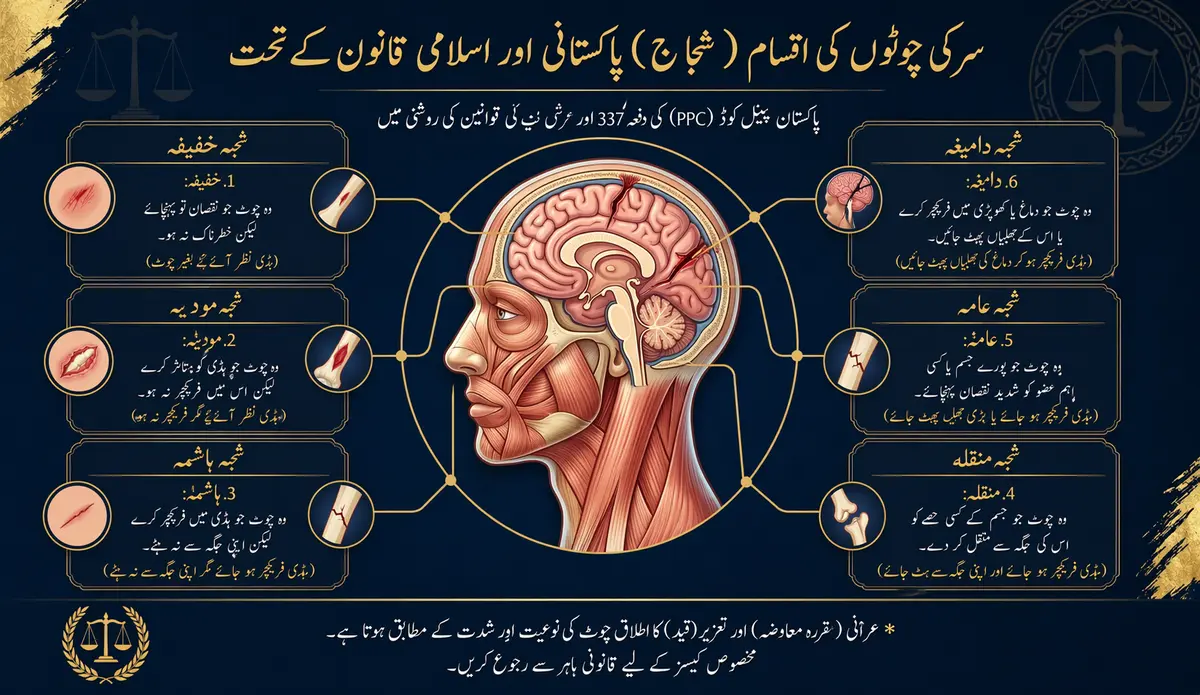
Six types of Shajjah head injuries under Section 337-A PPC: Khafifah, Mudihah, Hashimah, Munaqqilah, Ammah, and Damighah.
دفعہ 337-A PPC کے تحت شجہ کی چھ اقسام: خفیہ، موضحہ، ہاشمہ، منقلہ، آمہ، اور دامغہ۔
4. Shajjah (شجہ) – Head and Face Injuries (6 Types)
4.1 Overview and Section 337-A
Shajjah is a term exclusively reserved for head and face wounds. The law recognizes that injuries to the head and face carry a special gravity because they involve the brain, sensory organs, and appearance. Section 337-A PPC classifies Shajjah into six distinct types, each based on the depth and severity of the wound.
شجہ ایک ایسی اصطلاح ہے جو خصوصی طور پر سر اور چہرے کے زخموں کے لیے مخصوص ہے۔ قانون تسلیم کرتا ہے کہ سر اور چہرے کی چوٹیں خاص اہمیت رکھتی ہیں کیونکہ ان کا تعلق دماغ، حسی اعضاء، اور صورت سے ہے۔ دفعہ 337-A PPC شجہ کی چھ الگ الگ اقسام بیان کرتی ہے، ہر ایک زخم کی گہرائی اور شدت پر مبنی ہے۔
4.2 Detailed Table of Shajjah Types
| Type | Urdu | Description | Section | Punishment |
|---|---|---|---|---|
| Khafifah | خفیہ | Bone not visible; superficial scratch | 337-A(i) | Arsh + imprisonment |
| Mudihah | موضحہ | Bone visible but not fractured | 337-A(ii) | Arsh + imprisonment |
| Hashimah | ہاشمہ | Bone fractured but not displaced | 337-A(iii) | Arsh + imprisonment |
| Munaqqilah | منقلہ | Bone fractured and displaced | 337-A(iv) | Higher Arsh + imprisonment |
| Ammah | آمہ | Wound reaches brain membrane | 337-A(v) | Severe Arsh + long imprisonment |
| Damighah | دامغہ | Brain membrane torn; brain damaged | 337-A(vi) | Maximum Arsh + maximum imprisonment |
| قسم | انگریزی | تفصیل | دفعہ | سزا |
|---|---|---|---|---|
| خفیہ | Khafifah | ہڈی نظر نہ آئے؛ سطحی خراش | 337-A(i) | عرش + قید |
| موضحہ | Mudihah | ہڈی نظر آئے مگر ٹوٹے نہیں | 337-A(ii) | عرش + قید |
| ہاشمہ | Hashimah | ہڈی ٹوٹے مگر جگہ سے نہ ہلے | 337-A(iii) | عرش + قید |
| منقلہ | Munaqqilah | ہڈی ٹوٹ کر سرک جائے | 337-A(iv) | زیادہ عرش + قید |
| آمہ | Ammah | زخم دماغ کی جھلی تک پہنچے | 337-A(v) | شدید عرش + طویل قید |
| دامغہ | Damighah | دماغ کی جھلی پھٹے؛ دماغ کو نقصان | 337-A(vi) | زیادہ سے زیادہ عرش + قید |
4.3 Importance of Immediate Medical Examination
Head injuries are notorious for deteriorating over time. A seemingly minor Shajjah-i-Khafifah can escalate to Ammah if internal bleeding occurs. This is why immediate medical examination is not just advisable—it is legally imperative. The MLC must document the wound's initial appearance, depth, and any neurological symptoms. Without timely documentation, the defence will argue that the injury was not serious, and the court may reduce the charge. See our detailed guide on Hurt Procedure Part 2.
سر کی چوٹیں وقت کے ساتھ بگڑنے کے لیے بدنام ہیں۔ بظاہر معمولی شجہ خفیہ اندرونی خون بہنے کی صورت میں آمہ میں تبدیل ہو سکتی ہے۔ یہی وجہ ہے کہ فوری میڈیکل معائنہ نہ صرف مشورہ ہے—بلکہ قانونی طور پر ناگزیر ہے۔ MLC میں زخم کی ابتدائی حالت، گہرائی، اور اعصابی علامات کو درج ہونا چاہیے۔ بروقت دستاویز کے بغیر دفاع یہ دلیل دے گا کہ چوٹ سنگین نہیں تھی، اور عدالت الزام کم کر سکتی ہے۔
5. Jurh (جُرح) – Deep Injuries to Body Other Than Head/Face
5.1 Jaifah (جائفہ) – Cavity-Penetrating Wounds (Section 337-C)
Jurh refers to wounds on parts of the body other than the head and face. The most serious form is Jaifah, defined under Section 337-C PPC. A Jaifah is a wound that penetrates into a body cavity—the abdomen, chest, or back—reaching the internal organs. Punishment for Jaifah includes Daman (compensation) and imprisonment up to 10 years. Unlike Shajjah, Jaifah does not have Qisas as a primary remedy because exact retribution in kind is nearly impossible for internal wounds.
جرح سر اور چہرے کے علاوہ جسم کے حصوں کے زخموں کو کہتے ہیں۔ اس کی سب سے سنگین شکل جائفہ ہے، جس کی تعریف دفعہ 337-C PPC میں ہے۔ جائفہ وہ زخم ہے جو جسم کے کسی خلا—پیٹ، سینے، یا کمر—میں داخل ہو کر اندرونی اعضاء تک پہنچ جائے۔ جائفہ کی سزا میں دمن (معاوضہ) اور 10 سال تک قید شامل ہے۔ شجہ کے برعکس، جائفہ میں قصاص بنیادی علاج نہیں کیونکہ اندرونی زخموں کے لیے عین بدلہ تقریباً ناممکن ہے۔
5.2 Ghayr-Jaifah (غیر جائفہ) – Six Sub-types (Section 337-F)
When a wound does not penetrate a body cavity but is still deep enough to cause significant tissue damage, it is classified as Ghayr-Jaifah. Section 337-F PPC enumerates six sub-types:
| Type | Urdu | Description |
|---|---|---|
| Damiyah | دامیہ | Blood flows out |
| Badiah | باضعہ | Flesh is cut |
| Mutalahimah | متلاحمہ | Wound penetrates deep into flesh |
| Mudihah | موضحہ | Bone becomes visible |
| Hashimah | ہاشمہ | Bone fractures |
| Munaqqilah | منقلہ | Bone fractures and displaces |
| قسم | انگریزی | تفصیل |
|---|---|---|
| دامیہ | Damiyah | خون نکل آئے |
| باضعہ | Badiah | گوشت کٹ جائے |
| متلاحمہ | Mutalahimah | گوشت کے اندر گہرا اتر جائے |
| موضحہ | Mudihah | ہڈی نظر آ جائے |
| ہاشمہ | Hashimah | ہڈی ٹوٹ جائے |
| منقلہ | Munaqqilah | ہڈی ٹوٹ کر سرک جائے |
6. Other Hurt-Related Offences
6.1 Itlaf-i-Ghayr-Amd – Accidental Injury (Section 337-L)
Not all hurt is intentional. Section 337-L PPC covers Itlaf-i-Ghayr-Amd, or accidental injury caused by mistake or negligence. For example, if a person fires a gun during hunting and accidentally injures someone, this section applies. The punishment is significantly lighter—typically Arsh without imprisonment, unless gross negligence is proven.
تمام Hurt جان بوجھ کر نہیں کی جاتی۔ دفعہ 337-L PPC اتلافِ غیر عمد کو کور کرتی ہے، یعنی غلطی یا غفلت سے لگی چوٹ۔ مثال کے طور پر، اگر کوئی شخص شکار کے دوران گولی چلا دے اور غلطی سے کسی کو زخمی کر دے تو یہ دفعہ لاگو ہوتی ہے۔ سزا نسبتاً ہلکی ہوتی ہے—عام طور پر قید کے بغیر عرش، سوائے اس کے کہ شدید غفلت ثابت ہو جائے۔
6.2 Causing Hurt by Poison (Section 337-J)
Section 337-J PPC specifically addresses hurt caused by administering poison or any stupefying, intoxicating, or unwholesome substance. The law treats this as a distinct offence because of the premeditated and clandestine nature of poisoning. Forensic evidence is paramount in such cases.
دفعہ 337-J PPC خاص طور پر زہر یا کوئی بے ہوش کرنے والی، نشہ آور، یا مضرِ صحت شے دے کر Hurt پہنچانے سے متعلق ہے۔ قانون اسے ایک الگ جرم مانتا ہے کیونکہ زہر دینا منصوبہ بند اور خفیہ نوعیت کا ہوتا ہے۔ ایسے مقدمات میں فرانزک شواہد سب سے اہم ہوتے ہیں۔
7. Medical Examination – The Backbone of a Hurt Case
7.1 Legal Basis for MLC/MLR
The Medico-Legal Certificate (MLC) or Medico-Legal Report (MLR) is the single most important document in any hurt case. Its legal foundation lies in: Section 174 CrPC (mandates police to arrange medical examination of injured persons) and Police Rules, 1934, Chapter 25 (details the procedure for obtaining MLC, including the issuance of a Police Rukka). Without a proper MLC, the prosecution's case collapses—no matter how many eyewitnesses testify.
میڈیکو لیگل سرٹیفکیٹ (MLC) یا میڈیکو لیگل رپورٹ (MLR) کسی بھی Hurt مقدمے میں سب سے اہم دستاویز ہے۔ اس کی قانونی بنیاد: دفعہ 174 ضابطہ فوجداری (پولیس کو زخمی افراد کے طبی معائنے کا بندوبست کرنے کی پابند کرتی ہے) اور پولیس رولز 1934، باب 25 (پولیس رقعہ کے اجراء سمیت MLC حاصل کرنے کا طریقہ کار)۔ مناسب MLC کے بغیر استغاثہ کا مقدمہ ڈھے جاتا ہے—چاہے کتنے ہی چشم دید گواہ گواہی دیں۔
7.2 Consequences of Delay – Benefit of Doubt
Delay in obtaining a medical examination is the most common defence strategy in hurt cases. If there is a gap of 24 hours or more between the injury and the MLC, the defence will argue: (1) The wounds are self-inflicted. (2) The wounds were caused elsewhere and falsely attributed to the accused. (3) The delay indicates fabrication. If the prosecution fails to provide a reasonable explanation for the delay (such as unconsciousness, distance to hospital, or police negligence), the court will extend the Benefit of Doubt to the accused, often resulting in acquittal.
میڈیکل معائنے میں تاخیر Hurt مقدمات میں سب سے عام دفاعی حکمت عملی ہے۔ اگر چوٹ لگنے اور MLC بنوانے کے درمیان 24 گھنٹے یا اس سے زیادہ کا وقفہ ہو تو دفاع یہ دلیل دے گا: (1) زخم خود ساختہ ہیں۔ (2) زخم کہیں اور لگوائے گئے اور جھوٹا ملزم پر تھوپے گئے۔ (3) تاخیر جعلی سازی کا اشارہ ہے۔ اگر استغاثہ تاخیر کی معقول وجہ (جیسے بے ہوشی، ہسپتال کی دوری، یا پولیس کی غفلت) فراہم کرنے میں ناکام رہے تو عدالت ملزم کو شک کا فائدہ دے گی، جو اکثر بریت کا باعث بنتا ہے۔
⚠️ WARNING: In my 25 years of practice, I have seen countless strong cases collapse because the victim delayed the medical examination. Go to a government hospital immediately—do not wait, do not treat at home, do not rely on a private clinic alone.
⚠️ انتباہ: اپنے 25 سالہ کیریئر میں، میں نے بے شمار مضبوط مقدمات ڈھلتے دیکھے ہیں کیونکہ متاثرہ نے میڈیکل کرانے میں تاخیر کی۔ فوراً سرکاری ہسپتال جائیں—انتظار نہ کریں، گھر پر علاج نہ کریں، صرف پرائیویٹ کلینک پر انحصار نہ کریں۔
7.3 Government vs Private Medical Reports
Legally, a medico-legal certificate issued by a Government Hospital carries far greater weight than a private medical report. The Qanun-e-Shahadat Order recognizes government medical officers as experts under Section 59. A private hospital's report is admissible only if confirmed by a government medical officer. Therefore, the safest and legally strongest route is always a government hospital MLC.
قانونی طور پر، سرکاری ہسپتال کا جاری کردہ میڈیکو لیگل سرٹیفکیٹ پرائیویٹ میڈیکل رپورٹ سے کہیں زیادہ وزن رکھتا ہے۔ قانون شہادت آرڈر سرکاری میڈیکل آفیسرز کو دفعہ 59 کے تحت ماہر تسلیم کرتا ہے۔ پرائیویٹ ہسپتال کی رپورٹ صرف اس وقت قابل قبول ہے جب کسی سرکاری میڈیکل آفیسر سے اس کی تصدیق کرائی جائے۔ لہٰذا، سب سے محفوظ اور قانونی طور پر مضبوط راستہ ہمیشہ سرکاری ہسپتال کا MLC ہے۔
8. Step-by-Step Practical Guide After Injury
If you or a loved one has suffered a hurt injury, follow these steps immediately:
✅ Step 1: Go to the nearest police station and obtain a Police Rukka describing the injuries.
✅ Step 2: Proceed to a Government Hospital's Medico-Legal Department with the Rukka and get an MLC prepared. Tell the doctor every detail—wound location, weapon used, and time of incident.
✅ Step 3: After the MLC, return to the police station and file an FIR with the correct PPC sections. Insist on mentioning all injuries.
✅ Step 4: If the police refuse to register the FIR, file a petition under Section 22-A or 22-B CrPC before the concerned Magistrate or Justice of Peace.
✅ Step 5: Consult an experienced criminal lawyer immediately. Time is the most valuable asset in a hurt case.
✅ پہلا: قریبی تھانے جائیں اور زخموں کی تفصیل والا پولیس رقعہ حاصل کریں۔
✅ دوسرا: رقعہ لے کر سرکاری ہسپتال کے میڈیکو لیگل ڈپارٹمنٹ جائیں اور MLC بنوائیں۔ ڈاکٹر کو ہر تفصیل بتائیں—زخم کی جگہ، استعمال شدہ آلہ، اور واقعے کا وقت۔
✅ تیسرا: MLC کے بعد، تھانے واپس جائیں اور درست PPC دفعات کے ساتھ ایف آئی آر درج کروائیں۔ تمام زخموں کا ذکر کرنے پر اصرار کریں۔
✅ چوتھا: اگر پولیس ایف آئی آر درج کرنے سے انکار کرے تو متعلقہ مجسٹریٹ یا جسٹس آف پیس کے سامنے دفعہ 22-A یا 22-B CrPC کے تحت درخواست دائر کریں۔
✅ پانچواں: فوراً کسی تجربہ کار فوجداری وکیل سے مشورہ کریں۔ Hurt مقدمے میں وقت سب سے قیمتی اثاثہ ہے۔
9. Local Legal Assistance – Mastung & Balochistan
If you are facing a hurt case in Mastung, Quetta, or anywhere in Balochistan, our legal team at MK Legal Hub is ready to assist. We have extensive experience appearing before: District Courts in Mastung, Quetta, and other Balochistan districts; Balochistan High Court in Quetta; Sessions Courts for bail and trial matters. We provide comprehensive legal services including drafting of FIRs, bail petitions, and criminal complaints; medical report analysis and expert coordination; Arsh and Daman calculation; and trial representation and appeal filing.
اگر آپ مستونگ، کوئٹہ، یا بلوچستان میں کہیں بھی Hurt مقدمے کا سامنا کر رہے ہیں تو MK Legal Hub کی قانونی ٹیم آپ کی مدد کے لیے تیار ہے۔ ہمیں درج ذیل عدالتوں میں پیش ہونے کا وسیع تجربہ ہے: مستونگ، کوئٹہ اور بلوچستان کے دیگر اضلاع کی ضلعی عدالتیں؛ کوئٹہ میں بلوچستان ہائی کورٹ؛ ضمانت اور ٹرائل کے معاملات کے لیے سیشن عدالتیں۔ ہم جامع قانونی خدمات فراہم کرتے ہیں جن میں شامل ہیں: ایف آئی آر، ضمانت کی درخواستوں، اور فوجداری شکایات کی ڈرافٹنگ؛ میڈیکل رپورٹ کا تجزیہ اور ماہرین سے رابطہ؛ عرش اور دمن کا حساب؛ اور ٹرائل میں نمائندگی اور اپیل دائر کرنا۔
10. Frequently Asked Questions (FAQs)
👨⚖️ Expert Legal Opinion – Chief Atta Ullah Baloch
Chief Atta Ullah Baloch
Senior Criminal Defence Expert | MK Legal Hub | 25+ Years Experience
"My 25 years of criminal defence practice have taught me one iron rule of hurt cases: the side with the better and more timely medical evidence wins. I have seen strong eyewitness cases lose because the MLC was delayed by just a few hours. Conversely, I have secured acquittals for clients solely because the prosecution's medical evidence was contradictory or delayed. If you are injured, forget everything else—get your MLC done now. Everything else can wait." — Chief Atta Ullah Baloch, Senior Advocate
"فوجداری دفاع کے 25 سالوں نے مجھے Hurt مقدمات کا ایک لوہے کا اصول سکھایا ہے: جس فریق کے پاس بہتر اور زیادہ بروقت میڈیکل ثبوت ہوتے ہیں، وہ جیتتا ہے۔ میں نے مضبوط چشم دید گواہوں والے مقدمات ہارتے دیکھے کیونکہ MLC میں صرف چند گھنٹوں کی تاخیر تھی۔ اس کے برعکس، میں نے کلائنٹس کو صرف اس بنیاد پر بری کروایا کہ استغاثہ کے میڈیکل ثبوت متضاد تھے یا تاخیر کا شکار تھے۔ اگر آپ زخمی ہیں تو باقی سب بھول جائیں—اپنا MLC ابھی بنوائیں۔ باقی سب انتظار کر سکتا ہے۔"
Facing a Hurt Case in Mastung or Balochistan?
Don't let a delay in medical evidence cost you your case. Contact our expert defence team at MK Legal Hub now for immediate legal assistance.
مستونگ یا بلوچستان میں Hurt مقدمے کا سامنا ہے؟