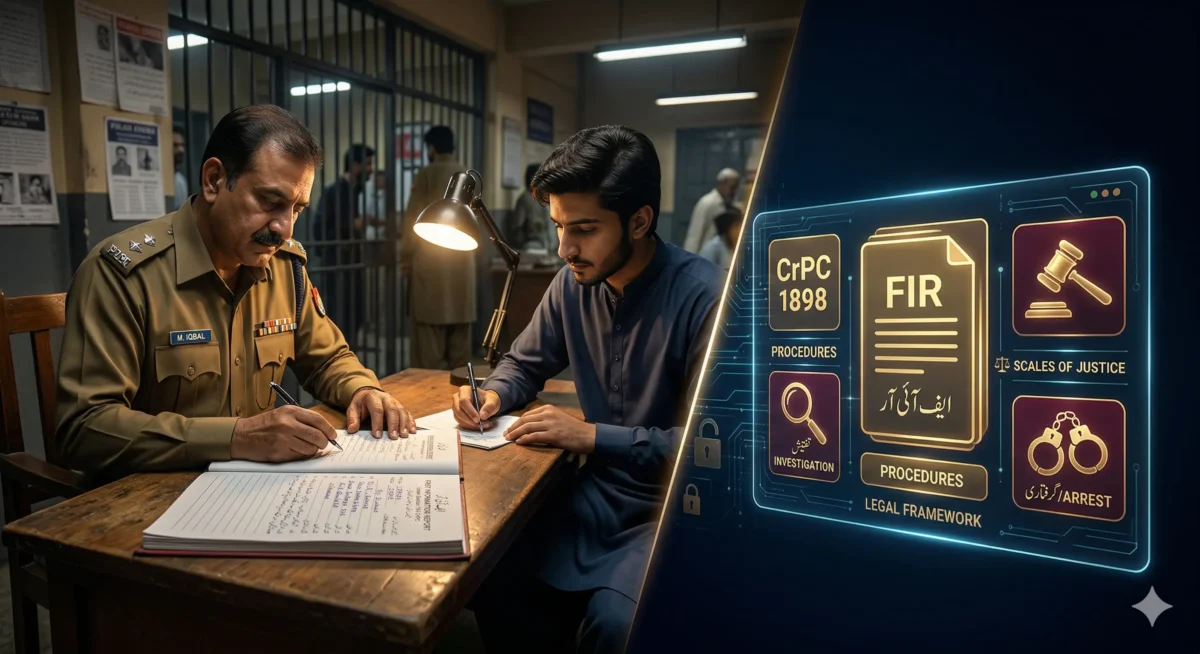
FIR and Police Procedures in Pakistan: Complete Guide Under CrPC 1898 | Section 154 to 173
A comprehensive guide on FIR and police procedures in Pakistan under the Code of Criminal Procedure 1898. Learn FIR registration under Section 154 CrPC, police investigation, remand procedure, and legal remedies including Section 22-A/22-B and Section 561-A CrPC. Also explore our detailed guides on CDR admissibility in Pakistani courts and how to get bail in Pakistan step by step.
1. Introduction to FIR and Police Procedures in Pakistan
The First Information Report (FIR) is the most important document in the Pakistani criminal justice system. Registered under Section 154 of the Code of Criminal Procedure (CrPC) 1898, the FIR sets the entire criminal law in motion. Understanding FIR and police procedures in Pakistan is essential for every citizen, lawyer, and law enforcement officer. This comprehensive guide covers everything from FIR registration to police investigation, remand procedures, and legal remedies. For bail-related matters, see our step-by-step bail guide under Sections 497 and 498 CrPC.
2. What is FIR (First Information Report)? – Section 154 CrPC
Definition: FIR is a written document prepared by the police when they receive information about the commission of a cognizable offence. It is the first step in the criminal justice process. Understanding FIR and police procedures in Pakistan starts with knowing that Section 154 CrPC mandates FIR registration for cognizable offences without any delay.
3. Essential Contents of a Valid FIR
| # | Content Required | Description | اردو |
|---|---|---|---|
| 1 | Date and Time | When incident occurred and FIR registered | تاریخ اور وقت |
| 2 | Place of Occurrence | Exact location of crime | جائے وقوعہ |
| 3 | Complainant Information | Name, father's name, address, CNIC | مدعی کی معلومات |
| 4 | Accused Information | Names/descriptions of accused persons | ملزمان کی معلومات |
| 5 | Witness Names | Names of eyewitnesses | گواہوں کے نام |
| 6 | Offence Details | Which PPC/CNSA sections invoked | جرم کی دفعات |
| 7 | Incident Description | Complete narrative | واقعے کی تفصیل |
| 8 | Case Property | Stolen property, weapons, evidence recovered | مالِ مقدمہ |
| 9 | Signature | Complainant's signature or thumb impression | دستخط/انگوٹھے کا نشان |
4. Classification of Offences Under CrPC
| Type | Police Powers | Examples | اردو |
|---|---|---|---|
| Cognizable | Arrest without warrant | Murder (302), Theft (379) | قابلِ دست اندازی |
| Non-Cognizable | Magistrate warrant required | Defamation (499) | ناقابلِ دست اندازی |
| Bailable | Bail is a right | Minor theft | قابلِ ضمانت |
| Non-Bailable | Bail at court discretion | Murder, Dacoity | ناقابلِ ضمانت |
Understanding this classification is central to mastering FIR and police procedures in Pakistan, as it determines the powers of police and rights of the accused.
5. Complete Procedure for FIR Registration – Step by Step
Step 1: Approach Police Station
Go to police station with jurisdiction
Step 2: Provide Information
Give information orally or in writing
Step 3: Read and Sign FIR
FIR read back, sign or thumb impression
Step 4: Get Free Copy
Under Section 154 CrPC
Step 5: Police Investigation
Under Section 156 CrPC
6. What If Police Refuse to Register FIR? – Section 22-A/22-B CrPC
Remedy 1: Higher Police Complaint
Complaint to SP, DIG, or IGP
Remedy 2: Section 22-A/22-B
Petition before Justice of Peace
Remedy 3: Private Complaint
Under Section 200 CrPC
Remedy 4: Writ Petition
Under Article 199 Constitution
7. Police Investigation Procedure – Sections 156 to 173 CrPC
| Section | Topic | Purpose | اردو |
|---|---|---|---|
| 156 CrPC | Power to Investigate | Authority to investigate | تفتیش کا اختیار |
| 161 CrPC | Examination of Witnesses | Record statements (no signature) | گواہوں سے پوچھ گچھ |
| 162 CrPC | Statements Not to be Signed | Protects witnesses from coercion | بیانات پر دستخط نہیں |
| 164 CrPC | Confession Before Magistrate | Confessions recorded by magistrate | مجسٹریٹ کے سامنے اقبالیہ |
| 165 CrPC | Search Without Warrant | Police search in urgent cases | بغیر وارنٹ تلاشی |
| 167 CrPC | Remand Procedure | Physical and judicial remand | ریمانڈ کا طریقہ کار |
| 173 CrPC | Final Police Report | Challan submitted to court | چالان عدالت میں پیش کرنا |
8. Remand Procedure Under Section 167 CrPC
| Remand Type | Custody | Maximum Duration | Who Authorizes | اردو |
|---|---|---|---|---|
| Physical Remand | Police custody | 15 days total | Magistrate | جسمانی ریمانڈ |
| Judicial Remand | Jail custody | Up to 90 days | Magistrate | عدالتی ریمانڈ |
Important: Police cannot detain for more than 24 hours without magistrate order. Physical remand beyond 15 days is illegal.
9. Rights of Accused During Police Investigation (Corrected)
| Right | Legal Basis (Corrected) | اردو |
|---|---|---|
| Right to know grounds of arrest | Article 10 Constitution | گرفتاری کی وجہ بتانے کا حق |
| Right to consult lawyer | Article 10(1) Constitution | وکیل سے مشورے کا حق |
| Right to be produced before magistrate | Article 10 Constitution | 24 گھنٹے میں عدالت پیشی |
| Right to silence | Article 13-b QSO | خاموشی کا حق |
| Right to medical examination | Section 54-A CrPC | طبی معائنے کا حق |
These rights form the bedrock of FIR and police procedures in Pakistan, ensuring that no citizen is subjected to unlawful detention or torture.
10. Illegal Arrest and Detention – Legal Remedies
Writ of Habeas Corpus
Section 491 CrPC / Article 199 of the Constitution of Pakistan
Police Torture Complaint
Section 337-K Pakistan Penal Code (PPC) (Causing hurt to extort confession)
Civil Suit for Damages
Compensation for illegal arrest
11. Quashing of FIR – Section 561-A CrPC
| Ground | Explanation | اردو |
|---|---|---|
| No cognizable offence | Allegations do not constitute any offence | کوئی جرم ثابت نہیں |
| Mala fide intention | FIR with ulterior motive | بدنیتی پر مبنی |
| Time barred | Beyond limitation period | وقت گزر چکا |
12. Frequently Asked Questions (FAQs) – Corrected
1. What is FIR and under which section? +
Under Section 154 CrPC. For bail procedures, see our detailed bail guide.
2. Confession before police admissible? +
No. Inadmissible under Article 38 & 39 QSO. For electronic evidence rules like CDRs, refer to CDR admissibility guide.
3. Medical examination of accused? +
Under Section 54-A CrPC.
4. Right to lawyer under Constitution? +
Article 10(1) Constitution.
5. Police torture punishment? +
Section 337-K PPC.
6. Maximum physical remand? +
15 days total under Section 167 CrPC.
7. Can FIR be quashed? +
Yes, under Section 561-A CrPC.
8. Remedy for illegal detention? +
Habeas Corpus under Article 199 Constitution.
13. Expert Opinion

Mr. Atta Ullah Baloch
Advocate High Court | 25 Years Experience"Three common legal misconceptions clarified: (1) Confession before police is inadmissible under Article 38 & 39 QSO; (2) Medical examination of accused is under Section 54-A CrPC; (3) Police torture to extort confession is punishable under Section 337-K PPC. Mastering FIR and police procedures in Pakistan is the first step toward protecting your liberty. For electronic evidence challenges, see our CDR admissibility guide."
14. Summary Table of Key Sections & Conclusion
| Section | Topic | Purpose | اردو |
|---|---|---|---|
| 154 CrPC | FIR Registration | First information about cognizable offence | ایف آئی آر درج کرانا |
| 167 CrPC | Remand Procedure | Physical and judicial remand | ریمانڈ کا طریقہ کار |
| 38 & 39 QSO | Confession Admissibility | Police confession inadmissible | پولیس کے سامنے اقبالیہ ناقابل قبول |
| 54-A CrPC | Medical Examination | Right of accused for medical check | ملزم کا طبی معائنہ |
| 337-K PPC | Police Torture | Punishment for torture to extort confession | اقبالیہ لینے کے لیے تشدد کی سزا |
Disclaimer: For informational purposes only. Consult a qualified lawyer for specific advice. For more legal resources, visit our bail guide and CDR admissibility guide.
For Legal Assistance: Mr. Atta Ullah Baloch – 03334966756