Pakistan Law Guide & Legal Drafting Platform
Pakistan law guide — Pakistan's most trusted platform for criminal law, family law, bail applications, legal notice formats, divorce procedure, court marriage, and online legal advice Pakistan. Built by Chief Atta Ullah Baloch, experienced lawyer in Balochistan with 25+ years courtroom practice in Mastung, Quetta, and across Pakistan.
پاکستان کا سب سے مستند قانونی پلیٹ فارم — 1000+ عدالتی ڈرافٹس، آن لائن قانونی مشورہ، ضمانت، طلاق، کورٹ میرج۔ چیف عطااللہ بلوچ، وکیل بلوچستان۔
Explore Our Legal Pillars
Pakistan law guide covers four comprehensive legal domains — each with detailed guides, Pakistan case law, and legal drafting Pakistan templates — serving lawyers in Balochistan and nationwide.
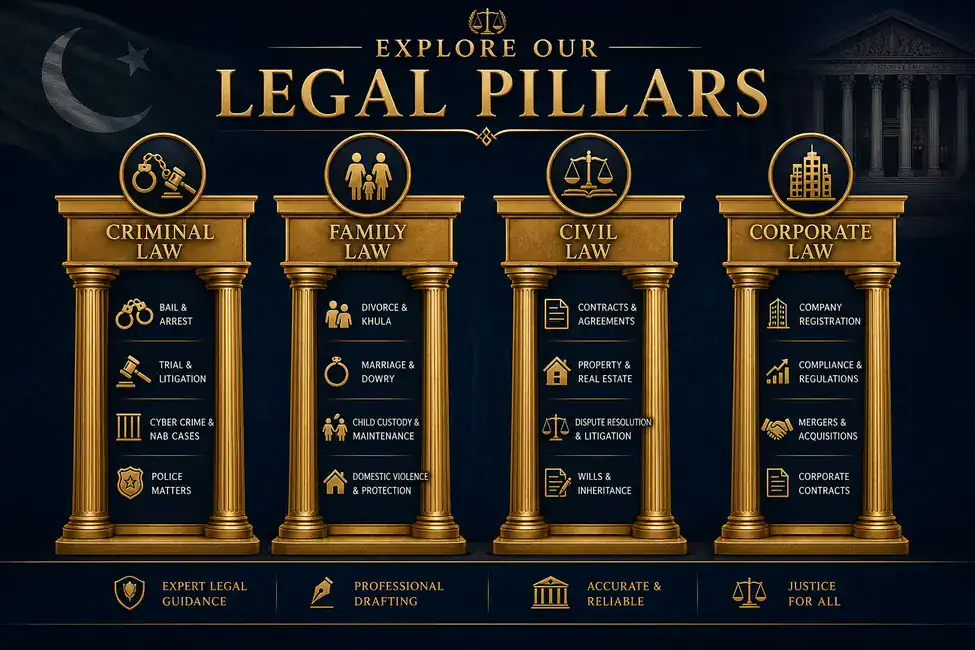
Pakistan law guide: Four comprehensive legal pillars — Criminal, Family, Civil, and Corporate Law.
پاکستان لاء گائیڈ کے چار قانونی ستون — فوجداری، خاندانی، دیوانی، اور کارپوریٹ قانون۔
Criminal Law
Criminal Law Hub →Family Law
Family Law Hub →Civil Law
- Property & Land Disputes
- Injunctions (Stay Orders)
- Contract Enforcement
- Recovery Suits
- Civil Procedure (CPC)
Corporate Law
- Company Registration (SECP)
- Taxation & FBR Filings
- Intellectual Property
- Commercial Contracts
- Regulatory Compliance
Smart Legal Tools — Generate in Minutes
Pakistan law guide includes 50+ smart legal tools — bail application Pakistan generator, legal notice format Pakistan drafts, and more.

Pakistan law guide: 50+ smart legal tools — generate bail petitions, legal notices, and FIR drafts in minutes.
پاکستان لاء گائیڈ کے 50+ سمارٹ قانونی ٹولز — ضمانت کی درخواستیں، قانونی نوٹس، اور ایف آئی آر ڈرافٹ منٹوں میں تیار کریں۔
Legal Notice Generator
Draft 8 types of legal notices — divorce, defamation, cheque bounce, eviction — formatted for Pakistani courts.
Use Tool →Bail Petition Generator
Generate pre-arrest and post-arrest bail — see all 11 bail types in Pakistan.
Use Tool →FIR Draft Tool (S.154 CrPC)
Create properly structured FIR drafts. See FIR procedure Pakistan.
Use Tool →Stop Searching. Start Generating.
Our Pakistan law guide and legal drafting Pakistan platform gives you professionally structured, court-ready drafts — instantly. Whether you need legal notice format Pakistan, bail application Pakistan, or online legal advice Pakistan — we've got you covered.
پرانی فارمیٹس کی تلاش میں وقت ضائع نہ کریں۔ پروفیشنل، عدالت کے لیے تیار ڈرافٹس — فوری طور پر حاصل کریں۔
📄 Get Your Draft Now →Built on Trust. Proven in Courts.
Years Courtroom Experience
Court-Ready Draft Templates
Smart Legal Tools
Across All Pakistan Courts
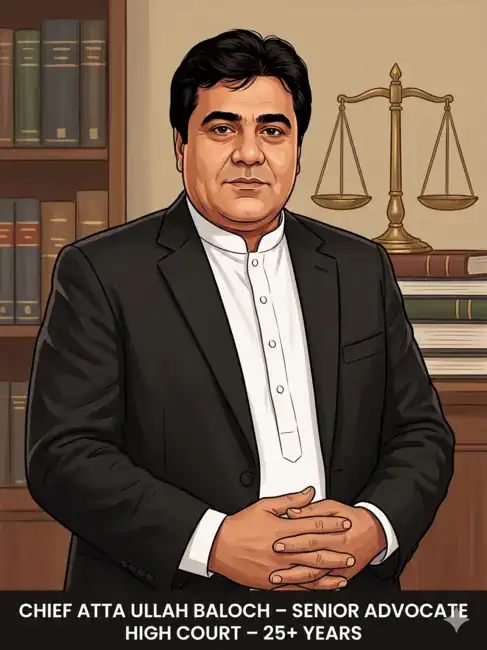
Pakistan law guide: Built by Chief Atta Ullah Baloch — Senior Advocate High Court, Mastung, Balochistan.
پاکستان لاء گائیڈ — چیف عطااللہ بلوچ، سینئر ایڈووکیٹ ہائی کورٹ، مستونگ، بلوچستان کی نگرانی میں۔
Chief Atta Ullah Baloch
Senior Advocate High Court | MK Law Associates | Leading lawyer in Balochistan with 25+ Years Active Practice in Mastung, Quetta, and across Pakistan
چیف عطااللہ بلوچ — سینئر ایڈووکیٹ ہائی کورٹ۔ 25 سال سے زائد کا عدالتی تجربہ۔ مستونگ، بلوچستان۔
Who Uses Pakistan Law Guide
⚖️ Lawyers
Save 80% drafting time. Generate petitions, notices, and suits in minutes.
📚 Law Students
Learn legal structure. Access simplified PPC/CrPC sections and Pakistan case law.
👥 Citizens
File FIRs. Apply for bail. Get online legal advice Pakistan — without spending thousands.
🏢 Businesses
Generate commercial contracts, recovery notices, and regulatory filings.

Pakistan law guide: Start using Pakistan's most trusted legal platform today — for lawyers, students, citizens, and businesses.
پاکستان لاء گائیڈ — آج ہی پاکستان کے سب سے مستند قانونی پلیٹ فارم کا استعمال شروع کریں۔
Start Using Pakistan's Most Trusted
Legal Platform Today
From lawyers in Balochistan to citizens nationwide — trust Pakistan law guide for criminal law Pakistan, family law Pakistan, legal drafting Pakistan, and more.
آج ہی پاکستان کے سب سے مستند قانونی پلیٹ فارم کا حصہ بنیں۔