Chain of Custody in Pakistan Criminal Cases – A Complete Legal Guide (2026)
Chain of custody in Pakistan criminal cases — جسے اردو میں "تسلسلِ حفاظت" یا "حفاظتی زنجیر" کہا جاتا ہے — وہ عمل ہے جس کے تحت موقعِ واردات سے ملنے والی شہادت کو قبضے میں لینے سے لے کر عدالت میں پیش کرنے تک کا مکمل ریکارڈ رکھا جاتا ہے۔ چیف عطاء اللہ بلوچ (سینئر ایڈووکیٹ ہائی کورٹ) کی یہ گائیڈ بتائے گی کہ یہ زنجیر کب ٹوٹتی ہے اور اس سے ملزم کو کیسے فائدہ پہنچتا ہے۔
⚡ Chain of Custody in Pakistan Criminal Cases – Key Takeaways
1. What is Chain of Custody in Pakistan Criminal Cases?
Chain of custody in Pakistan criminal cases کا مطلب ہے کہ جرم کی جگہ سے ملنے والی ہر چیز (اسلحہ، منشیات، خون، دستاویزات) کے ساتھ ایک مکمل تحریری ریکارڈ موجود ہو جو بتائے: کس نے شہادت کو قبضے میں لیا؟ کب اور کہاں سے لیا؟ کس حالت میں تھی؟ کس کس کے ہاتھوں سے گزری؟ کہاں محفوظ رہی؟ اور کون اسے عدالت میں لے کر آیا؟ For an overview of all criminal procedures, visit our Criminal Law Hub.
یہ کوئی ایک قانون نہیں بلکہ مختلف قوانین اور رولز کا مجموعہ ہے جو اس بات کو یقینی بناتا ہے کہ پیش کی گئی شہادت وہی ہے جو موقع سے برآمد ہوئی تھی۔
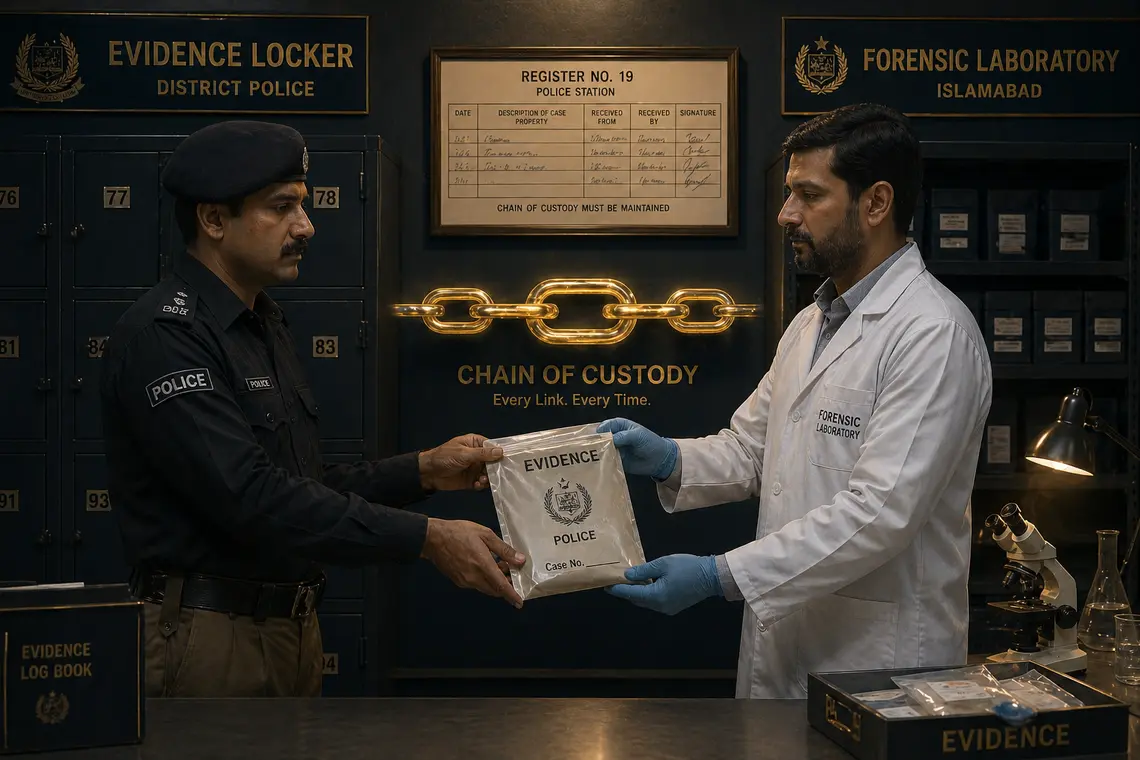
Chain of custody in Pakistan criminal cases — sealed evidence, Register No. 19, and safe transmission to forensic laboratory.
پاکستان کے فوجداری مقدمات میں تسلسلِ حفاظت — مہر بند شہادت، رجسٹر نمبر 19، اور فرانزک لیبارٹری تک محفوظ منتقلی۔
2. Legal Framework Governing Chain of Custody in Pakistan Criminal Cases
2.1 Qanun-e-Shahadat Order (QSO) 1984 – The Evidentiary Burden
قانونِ شہادت آرڈر 1984 کے تحت استغاثہ پر یہ بوجھ عائد ہوتا ہے کہ وہ ثابت کرے کہ پیش کی گئی شہادت وہی ہے جو موقعِ واردات سے ملی تھی۔ دفعہ 59 QSO کے تحت عدالت میں پیش کی جانے والی ہر چیز کی شناخت ضروری ہے — اور یہ شناخت اسی وقت ممکن ہے جب chain of custody in Pakistan criminal cases مکمل اور بلاخلا ہو۔ For more on criminal evidence, see our complete criminal law guide.
2.2 CrPC Provisions: Sections 51, 103, and 165
| دفعہ | موضوع |
|---|---|
| دفعہ 51 | پولیس کو تلاشی کا اختیار اور طریقہ کار |
| دفعہ 103 | تلاشی کے دوران گواہان کی موجودگی لازمی — see Section 103 CrPC Guide |
| دفعہ 165 | تفتیشی افسر کا تلاشی کا ریکارڈ رکھنے کا فرض |
2.3 Police Rules 1934 – Chapter 22 & 27 + Register No. 19
پولیس رولز 1934 کے باب 22 اور 27 میں تفصیل سے درج ہے کہ تھانے کے "مال خانے" (Malkhana) میں ضبط شدہ اشیاء کیسے رکھی جائیں گی اور رجسٹر نمبر 19 میں ہر چیز کا اندراج کیسے ہوگا۔ محرر (Moharrir) اس کا ذمہ دار ہوتا ہے۔ For complete police procedures, see FIR & Police Procedures.
2.4 CNSA 1997 – Narcotics-Specific Requirements
کنٹرول آف نارکوٹک سبسٹینسز ایکٹ (CNSA) 1997 میں خصوصی اور سخت قواعد موجود ہیں: دفعہ 36 (کیمیکل ایگزامینر کی رپورٹ کی قانونی حیثیت)، دفعہ 51 (پولیس کو تلاشی اور ضبطگی کے اختیارات)، اور 72 گھنٹے کا اصول (برآمدگی کے 72 گھنٹوں کے اندر نمونہ لیبارٹری بھیجنا لازمی)۔ For complete CNSA guide, read Narcotics Laws in Pakistan.
3. The Two Pillars: Safe Custody and Safe Transmission
3.1 Safe Custody – The Role of Moharrir and Register No. 19
محفوظ تحویل (Safe Custody) کا مطلب ہے کہ شہادت جب تھانے میں ہے تو وہ محفوظ ہے۔ محرر مالِ مقدمہ وصول کرتا ہے، رجسٹر نمبر 19 میں اس کا اندراج کرتا ہے، اور اسے مال خانے کی الماری یا لاکر میں محفوظ رکھتا ہے۔
3.2 Safe Transmission – Road Certificate and Courier Constable
محفوظ منتقلی (Safe Transmission) کا مطلب ہے کہ جب شہادت ایک جگہ سے دوسری جگہ جا رہی ہے تو اس دوران اس کے ساتھ کوئی چھیڑ چھاڑ نہیں ہوئی۔ اس کے لیے روڈ سرٹیفکیٹ (Road Certificate)، لیبارٹری رسید، اور کورئیر کانسٹیبل کا بیان درکار ہوتا ہے۔
📘 Key Principle (PLD 2019 SC 1): If the constable who transported the sample to the laboratory does not testify in court, the chain of custody in Pakistan criminal cases is broken and the accused is entitled to acquittal. Find more landmark judgments in our Case Laws Database.
4. Landmark Supreme Court Judgments
4.1 PLD 2019 Supreme Court 1 (Ikramullah vs. The State)
یہ سب سے اہم فیصلہ ہے۔ سپریم کورٹ نے قرار دیا کہ کیمیکل ایگزامینر کی رپورٹ تب تک معتبر نہیں جب تک یہ ثابت نہ ہو کہ نمونہ تھانے سے لیبارٹری تک مکمل طور پر محفوظ رہا۔ کورئیر کانسٹیبل کا بیان نہ ہونے پر chain of custody ٹوٹ جاتی ہے۔
4.2 2019 SCMR 608 (Amjad Ali vs. The State)
سپریم کورٹ نے کہا کہ اگر استغاثہ یہ ثابت نہ کر سکے کہ نمونہ تھانے کے مال خانے میں "محفوظ تحویل" میں تھا، تو ملزم بریت کا حقدار ہے۔
| کیس | عدالت | اصول |
|---|---|---|
| 2020 YLR 518 | لاہور ہائی کورٹ | غیر ضروری تاخیر = ثبوتوں کے ساتھ چھیڑ چھاڑ کا امکان |
| 2022 PCrLJ 456 | ہائی کورٹ | روڈ سرٹیفکیٹ کا نہ ہونا Safe Transmission کو مشکوک بنا دیتا ہے |
| 2021 YLR 1245 | لاہور ہائی کورٹ | کورئیر کانسٹیبل کا بیان نہ ہونا = Chain ٹوٹ گئی |
5. Seven Grounds for Acquittal When Chain of Custody is Broken
6. Practical Checklist for Defence Lawyers
For more defence strategies, see our guides on Rights of Accused and Criminal Defence.
7. Free Legal Drafts
📄 Template 1: Written Objection to Forensic Report on Broken Chain of Custody
📄 Template 2: Application for Acquittal on Broken Chain of Custody
مزید قانونی ڈرافٹس کے لیے Legal Drafting Services دیکھیں۔
8. Frequently Asked Questions (FAQs)
Q1: What is chain of custody in Pakistan criminal cases?
It is the documented record of every person who handled the evidence, from crime scene seizure to court presentation, ensuring it was not tampered with. For more on criminal procedures, see our Criminal Law Hub.
Q2: Under which law is chain of custody governed?
QSO 1984, Police Rules 1934 (Register No. 19), CrPC 1898 (Sections 51, 103, 165), and CNSA 1997.
Q3: What happens if chain of custody is broken?
The evidence becomes unreliable, and the accused is entitled to benefit of doubt — often resulting in acquittal. See our guide on filing criminal cases.
Q4: What is Register No. 19?
It is the police station record where all seized items are entered, maintained by the Moharrir under Police Rules 1934. Learn about police procedures in FIR & Police Guide.
Q5: What is the 72-hour rule in CNSA cases?
Under CNSA 1997, seized narcotics samples must be sent to the laboratory within 72 hours. Delay without explanation weakens the prosecution case.
Q6: Can an accused be convicted solely on a laboratory report?
No. As per PLD 2019 SC 1, the chain of custody must be unbroken for the laboratory report to be admissible as sole evidence.
Q7: What is the difference between Safe Custody and Safe Transmission?
Safe Custody = secure storage at police station. Safe Transmission = secure transport from police station to laboratory/court.
Q8: Can an acquittal be appealed by the prosecution?
Yes, but difficult if based on broken chain of custody because superior courts consistently uphold such acquittals. See Case Laws Database.
Q9: Who is responsible for maintaining chain of custody?
The Investigating Officer, Moharrir, and courier constable are jointly responsible.
Q10: What is the most important Supreme Court judgment on chain of custody?
PLD 2019 Supreme Court 1 (Ikramullah vs. The State) — absent courier testimony = broken chain = acquittal.

Chief Atta Ullah Baloch
Senior Advocate High Court | MK Legal Hub | 35+ Years Experience
"پاکستان کے فوجداری مقدمات میں chain of custody وہ خاموش ہتھیار ہے جو دفاعی وکیل کے ہاتھ میں ہوتا ہے۔ اگر آپ یہ ثابت کر سکیں کہ مالِ مقدمہ کی حفاظت کا تسلسل ٹوٹا ہے، تو آپ نے استغاثہ کی ساری بنیاد ہلا کر رکھ دی۔ رجسٹر نمبر 19 چیک کریں، کورئیر کانسٹیبل کا بیان مانگیں، اور 72 گھنٹے کا اصول کبھی نظرانداز نہ کریں۔"
Need Legal Help With Chain of Custody Defence?
تسلسلِ حفاظت کے دفاع کے لیے قانونی مدد چاہیے؟