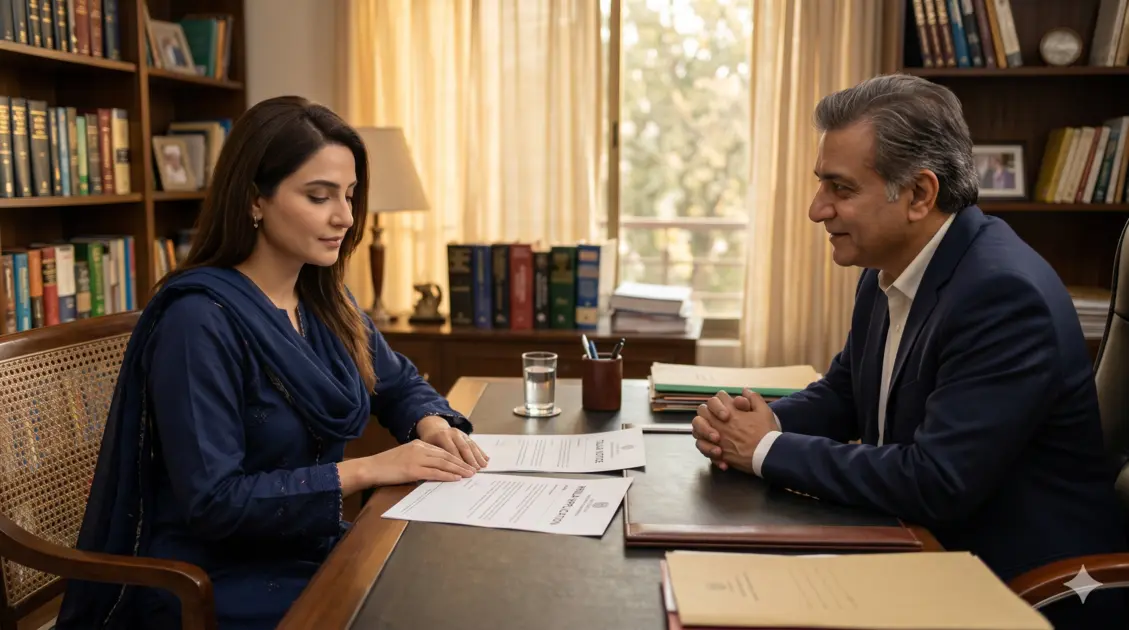
Khula vs Talaq in Pakistan: Which Path Is Right for You? Complete Comparison (2026)
You are at a crossroads in your marriage. You have heard about Khula and Talaq, but you are not sure which path applies to your situation. This is one of the most important decisions of your life and it deserves clarity, not confusion. This guide explains the difference between Khula vs Talaq in Pakistan, which is faster, which is better for your specific situation, what your legal rights are, and what mistakes to avoid. Written with the care and dignity that your situation deserves.
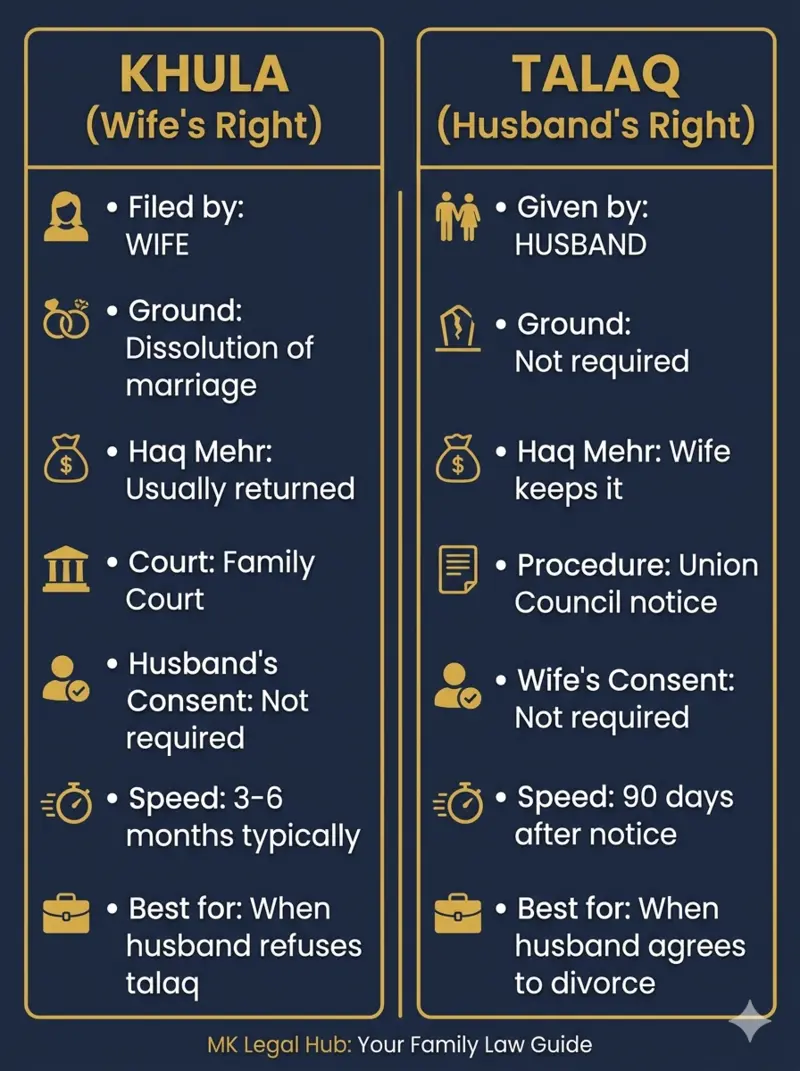
Khula is the wife's right to seek dissolution of marriage through the Family Court. It does not require the husband's consent. The wife typically returns her Haq Mehr. Talaq is the husband's right to divorce his wife by pronouncing talaq and following the Union Council procedure under the Muslim Family Laws Ordinance 1961. In simple terms: Khula is initiated by the wife. Talaq is initiated by the husband. If your husband is refusing to give talaq, your remedy is Khula. If your husband is willing to give talaq, the process is simpler and faster through Talaq. Both are legally valid forms of divorce in Pakistan.
1. Side-by-Side Comparison Table: Khula vs Talaq in Pakistan
| Factor | Khula (Wife's Right) | Talaq (Husband's Right) |
|---|---|---|
| Who Initiates | Wife | Husband |
| Legal Basis | Dissolution of Muslim Marriages Act 1939 | Muslim Family Laws Ordinance 1961 |
| Where Filed | Family Court | Union Council |
| Husband's Consent Needed | No | Not applicable |
| Wife's Consent Needed | Not applicable | No |
| Haq Mehr | Usually returned to husband | Wife keeps it |
| Procedure | File suit in Family Court, reconciliation attempts, decree | Pronounce talaq, serve Union Council notice, 90-day period, certificate |
| Timeline | 3 to 6 months (can be longer if contested) | 90 days after Union Council notice |
| Cost | Moderate: lawyer fees + court fees | Lower: Union Council fees only |
| Reconciliation Attempt | Mandatory by Family Court | Mandatory by Arbitration Council |
| Revocability | Final once decree is passed | Husband can revoke during 90-day period |
| Best For | When husband refuses talaq, or wife wants to initiate separation | When husband is willing to divorce, simpler process |
| Final Result | Marriage dissolved, both free to remarry | Marriage dissolved, both free to remarry |
2. What is Khula? The Wife's Right to Separation
Khula is the legal right of a Muslim wife to seek dissolution of her marriage through the Family Court. It is based on the Islamic principle that while the husband has the right to talaq, the wife has the right to khula.
✅ Initiated by the Wife
The wife files a suit for dissolution of marriage in the Family Court. She does not need the husband's permission or consent. Read: Khula Procedure Complete Guide.
✅ No Husband's Consent Required
This is the most important feature. If the husband is refusing to give talaq, khula is the wife's remedy. The court can dissolve the marriage even if the husband opposes it.
✅ Return of Haq Mehr
In most khula cases, the wife returns her Haq Mehr (dower) to the husband. This is based on the Islamic principle of dissolution in exchange for consideration. Read: Haq Mehr Recovery Guide.
✅ Reconciliation Attempt
The Family Court is required to attempt reconciliation between the parties before granting a decree. This is a mandatory step aimed at preserving the marriage if possible.
✅ Final Decree
Once the Family Court passes the decree for dissolution of marriage, the marriage is dissolved. The decree is final and neither party can revoke it.
3. What is Talaq? The Husband's Right to Divorce
Talaq is the legal right of a Muslim husband to divorce his wife. In Pakistan, the procedure for talaq is regulated by the Muslim Family Laws Ordinance 1961.
✅ Initiated by the Husband
The husband pronounces talaq, either orally or in writing. It can be given in a single pronouncement or in three pronouncements over three months. Read: Talaq Procedure Complete Guide.
✅ Union Council Notice
After pronouncing talaq, the husband must give written notice to the Union Council. A copy must also be sent to the wife. This is a mandatory legal requirement.
✅ 90-Day Waiting Period (Iddat)
The Union Council attempts reconciliation through an Arbitration Council. If reconciliation fails, the talaq becomes effective after 90 days from the date of the Union Council notice.
✅ Husband Can Revoke
During the 90-day period, the husband can revoke the talaq. After 90 days, the divorce becomes final. The wife keeps her full Haq Mehr.
✅ Certificate
After 90 days, the Union Council issues a divorce certificate. This is the official proof of divorce.
4. Which Is Faster? Khula vs Talaq Timeline Comparison
Talaq is generally faster than Khula.
Talaq Timeline (90 days minimum): Day 1, the husband pronounces talaq and files Union Council notice. Days 1 to 90, the Arbitration Council attempts reconciliation. Day 90, if reconciliation fails, divorce becomes final. After Day 90, the Union Council issues a divorce certificate. The entire process takes exactly 90 days if there are no procedural delays. The husband does not need to go to court.
Khula Timeline (3 to 6 months, can be longer): Week 1 to 2, the wife files suit in Family Court through a lawyer. Week 2 to 4, the court issues notice to the husband and the husband files a reply. Month 1 to 2, the court attempts reconciliation. Month 2 to 4, if reconciliation fails, evidence is recorded. Month 3 to 6, the court passes a decree for dissolution. If the husband contests the khula, the timeline can extend to a year or more. Most khula cases are decided within 3 to 6 months. Also see: Khula Kitne Din Mein Hota Hai.
5. Which Is Better for Your Situation?
There is no universal better option. The right choice depends entirely on your circumstances.
🌟 Choose Khula If
Your husband is refusing to give talaq. Your husband is absent, missing, or has abandoned you. Your husband is in prison or has been missing for years. You want to initiate the separation yourself. You are prepared for a court process that takes several months. You are willing to return your Haq Mehr.
🌟 Choose Talaq If
Your husband is willing to give talaq. You want a faster and less expensive process. You want to keep your full Haq Mehr. You prefer to avoid court proceedings. Your husband is present and cooperative.
🌟 Consider Mutual Divorce If
Both husband and wife agree to separate and can agree on terms. This is the fastest and least difficult option. Read: Mutual Divorce in Pakistan.
After separation, also consider: Maintenance rights after divorce and Child custody arrangements.
6. Can Husband Refuse Khula?
No, a husband cannot ultimately refuse Khula. This is the most important thing for women to understand. While the husband has the right to contest the khula petition in court, the Family Court has the authority to grant the dissolution decree even if the husband opposes it. The court examines whether the wife has valid grounds for seeking khula and whether reconciliation is genuinely possible. If the court finds that the marriage has irretrievably broken down and reconciliation is not possible, it will grant the decree regardless of the husband's position. The husband cannot permanently block a khula. However, the husband can delay the process by not appearing in court, filing unnecessary applications, or contesting the case on merit. A skilled family lawyer knows how to counter these delay tactics. Read: Family Court Procedure in Pakistan.
7. Common Mistakes Women Make
❌ Waiting Too Long to Take Action
Many women endure years of an unhappy or abusive marriage because they are unsure of their legal rights. You have options. The law protects you. Do not wait until the situation becomes unbearable.
❌ Not Understanding the Haq Mehr Implication
In khula, you typically return your Haq Mehr. In talaq, you keep it. This financial difference matters. Discuss it with your lawyer before deciding.
❌ Filing Khula Without Legal Representation
Family Courts follow specific procedures. A poorly drafted petition or missing document can delay your case by months. Always consult an experienced family lawyer.
❌ Not Considering Child Custody Simultaneously
If you have children, custody should be addressed at the same time as divorce or khula proceedings. Do not finalise the separation without securing custody arrangements. Read: Child Custody Law in Pakistan.
❌ Confusing Religious and Legal Requirements
Khula and talaq have both Islamic and legal dimensions in Pakistan. Both must be properly executed. A family lawyer ensures both aspects are correctly handled.
8. خلع یا طلاق: عام پاکستانی خاتون کے لیے مکمل اردو راہنما
جب شادی میں مزید رہنا ممکن نہ رہے تو ایک مسلمان عورت کے سامنے دو بنیادی راستے ہوتے ہیں: خلع یا طلاق۔
خلع کیا ہے؟
خلع وہ راستہ ہے جب آپ کا شوہر طلاق دینے سے انکار کر رہا ہو۔ یہ آپ کا قانونی حق ہے کہ آپ فیملی کورٹ میں جائیں اور جج سے کہیں کہ آپ کی شادی ختم کی جائے۔ اس کے لیے آپ کو شوہر کی اجازت کی ضرورت نہیں۔ عدالت آپ کی بات سنے گی، مصالحت کی کوشش کرے گی، اور اگر شادی ٹوٹ چکی ہے تو اسے ختم کر دے گی۔ عام طور پر آپ کو اپنا حق مہر واپس کرنا پڑتا ہے۔
طلاق کیا ہے؟
طلاق وہ راستہ ہے جب آپ کا شوہر خود طلاق دینے کو تیار ہو۔ یہ تیز اور آسان ہے۔ شوہر طلاق دیتا ہے، یونین کونسل کو نوٹس دیتا ہے، اور 90 دن بعد طلاق حتمی ہو جاتی ہے۔ اس میں آپ اپنا پورا حق مہر رکھتی ہیں۔
آپ کے لیے کون سا بہتر ہے؟
- اگر شوہر طلاق دے رہا ہے تو طلاق لیں: تیز، آسان، کم خرچ
- اگر شوہر انکار کر رہا ہے تو خلع دائر کریں: یہ آپ کا حق ہے، چاہے شوہر نہ مانے
- اگر دونوں راضی ہیں تو باہمی طلاق پر غور کریں: سب سے تیز اور پرسکون راستہ
شوہر خلع سے انکار کرے تو کیا ہوگا؟
شوہر حتمی طور پر خلع سے انکار نہیں کر سکتا۔ فیملی کورٹ کو یہ اختیار ہے کہ وہ شوہر کی مخالفت کے باوجود تنسیخ کی ڈگری جاری کرے۔ شوہر کارروائی میں تاخیر ضرور کر سکتا ہے، لیکن مستقل طور پر خلع کو نہیں روک سکتا۔
عام غلطیاں جو خواتین کرتی ہیں
- کارروائی کرنے میں بہت زیادہ تاخیر کرنا
- حق مہر کے مالی اثر کو نہ سمجھنا
- قانونی نمائندگی کے بغیر خلع دائر کرنا
- بچوں کی کسٹڈی پر بیک وقت غور نہ کرنا
- مذہبی اور قانونی تقاضوں کو آپس میں گڈمڈ کرنا
یاد رکھیں: قانون آپ کے ساتھ ہے۔ آپ اکیلے نہیں ہیں۔ کسی تجربہ کار فیملی وکیل سے مشورہ کریں اور اپنے حقوق جانیں۔
9. Frequently Asked Questions: Khula vs Talaq in Pakistan
Q1: Can I get khula without my husband's consent? +
Yes. That is the fundamental purpose of khula. The Family Court can dissolve your marriage even if your husband opposes it. You do not need his permission or consent. Read: Khula Procedure in Pakistan.
Q2: How long does khula take in Pakistan? +
Typically 3 to 6 months. If the husband contests the case, it can take longer. The court attempts reconciliation first, and if that fails, proceeds to evidence and decree. Read: Khula Kitne Din Mein Hota Hai.
Q3: Do I have to return my Haq Mehr in khula? +
Yes, in most cases. Khula is a dissolution at the wife's instance in exchange for consideration, which is typically the return of Haq Mehr. Read: Haq Mehr Recovery in Pakistan.
Q4: Can my husband revoke talaq after giving it? +
Yes, during the 90-day iddat period, the husband can revoke the talaq. After 90 days, the divorce becomes final and cannot be revoked.
Q5: What if my husband gives talaq but does not notify the Union Council? +
The talaq is still valid in Islamic law, but the husband may face penalties under the Muslim Family Laws Ordinance 1961 for failing to notify the Union Council. The wife should ensure the Union Council is notified to protect her rights.
Q6: Can I remarry after khula or talaq? +
Yes. After the iddat period (typically 90 days or until delivery of child if pregnant), the woman is free to remarry.
Q7: خلع اور طلاق میں سب سے بڑا فرق کیا ہے؟ +
Q8: کیا خلع کے لیے وکیل ضروری ہے؟ +

Chief Atta Ullah Baloch
Senior Advocate High Court · 25+ Years · Quetta & Mastung
"In my 25 years of practice in Family Courts across Balochistan, I have seen hundreds of women at the crossroads of khula and talaq. The confusion and fear in their eyes is something I understand deeply. The most important thing I tell every woman who walks into my office is this: the law is on your side. You are not trapped. You have rights. Khula exists precisely for the situation where a husband refuses to give talaq. Do not let anyone tell you that you must stay in a broken marriage because your husband will not release you. The Family Court can and will release you. That said, if your husband is willing to give talaq, that path is faster, simpler, and you keep your Haq Mehr. Every situation is different. Do not make this decision based on what you heard from a relative or read on social media. Speak to a qualified family lawyer who can assess your specific circumstances and guide you to the right path."

Not Sure Which Path to Take? Get Expert Family Law Guidance
Every marriage is different. Every situation is unique. The right choice between Khula and Talaq depends on your specific circumstances, your husband's position, and your future plans. Do not navigate this alone.
📱 WhatsApp: 03414834719 📧 Schedule Consultation