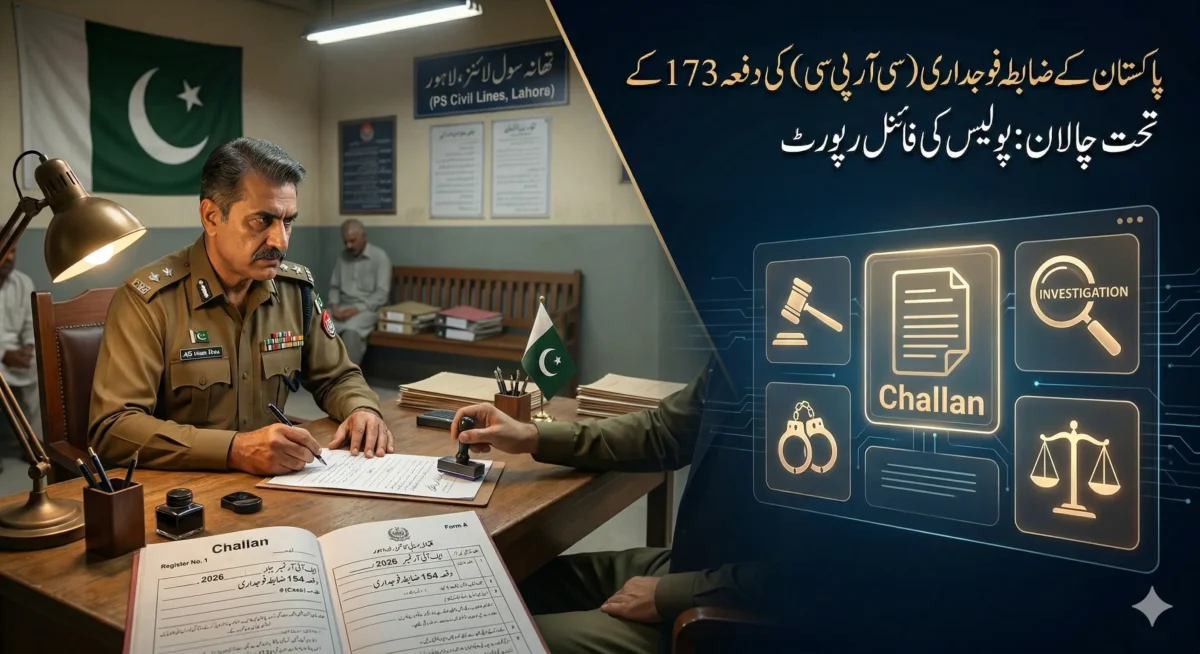
1. Introduction to Challan Under Section 173 CrPC Pakistan

A challan under section 173 CrPC Pakistan is the final police report submitted to the magistrate upon completion of investigation. It is the most crucial document after FIR that determines whether an accused will face trial. Understanding the challan under section 173 CrPC Pakistan is essential for every accused person, complainant, and legal practitioner.

چالان (پولیس کی حتمی رپورٹ) وہ دستاویز ہے جو تفتیش مکمل ہونے پر پولیس مجسٹریٹ میں پیش کرتی ہے۔ یہ فیصلہ کرتی ہے کہ ملزم پر مقدمہ چلے گا یا نہیں۔

2. Legal Framework – Section 173 CrPC

Section 173 CrPC law book open showing police final report provisions

Section 173 CrPC – Legal basis for police final report (Challan)

ProvisionRequirementاردو
Section 173(1)(a)Report format, parties, witnesses, evidenceرپورٹ کی تفصیلات
Section 173(1)(b)14 days for investigation, 3 days for interim reportتفتیش کی مدت
Section 173(2)Report signed by SHO, forwarded through Public Prosecutorدستخط اور پیشگی
Section 173(8)Further investigation and supplementary reportاضافی تفتیش

3. Types of Challan Under Section 173 CrPC Pakistan

Type of ChallanMeaningCourt Actionاردو
Positive ChallanSufficient evidence foundCourt takes cognizance, trial beginsمثبت چالان
Negative Challan / Cancellation ReportNo evidence foundMagistrate may accept cancellationمنفی چالان / اخراج مقدمہ
Partial ChallanEvidence against some accused onlyTrial for named accused onlyجزوی چالان
Incomplete / Interim ChallanInvestigation incomplete, submitted within 17 daysCourt may take cognizance or waitنامکمل / عبوری چالان
Supplementary ChallanAdditional evidence after initial challanCourt must read conjointly with primary reportاضافی چالان

4. Challan Columns (As per Police Rules)

Column No.ContentSignificanceاردو
Column No.1Accused sent up for trialSufficient evidence, will face trialمجرم
Column No.2 (Blue ink)Accused found innocent / insufficient evidenceMagistrate may still summonبے قصور
Column No.2 (Red ink)Accused absconding / proclaimed offenderArrest warrants issuedمفرور
Column No.3Complainant / informant detailsWho lodged the FIRمدعی
Column No.4Case property / recovered itemsEvidence to be produced in courtمال مقدمہ
Column No.5List of prosecution witnessesWitnesses to be examinedگواہ
Column No.6Summary of evidence collectedPrima facie case assessmentخلاصہ ثبوت

Important: The Magistrate is not bound by the Investigating Officer's recommendation. Even if accused is placed in Column No.2 (blue ink), the Magistrate can summon them for trial if there is sufficient evidence (PLD 1967 SC 425).

5. Time Limit for Challan Submission – Section 173(1)(b) CrPC

TimelineRequirementLegal Basisاردو
Day 0FIR registeredSection 154 CrPCایف آئی آر درج
Day 1-14Investigation periodSection 173(1)(b)تفتیش کا وقت
Day 14Challan must be submitted (if complete)Section 173(1)(b)چالان جمع کرانا
Day 15-17Interim challan within 3 days if incompleteSection 173(1)(b)عبوری چالان
Beyond 17 daysViolation of mandatory provisionPLJ 1995 Cr.C (Kar) 420قانونی خلاف ورزی

6. Court Procedure After Challan Submission

StepActionLegal Basisاردو
1Challan submitted to MagistrateSection 173 CrPCچالان جمع
2Magistrate takes cognizanceSection 190 CrPCعدالت کا نوٹس
3Copies of challan supplied to accusedSection 241-A CrPCکاپیاں فراہم
4Accused appears or is producedAs per summonsملزم کی پیشی
5Framing of chargeSection 265-D CrPCفرد جرم
6Commencement of trialAfter chargeمقدمہ شروع

7. Supplementary Challan – Section 173(8) CrPC

If after submitting the initial challan, the police obtains further evidence, they must submit a supplementary report under Section 173(8) CrPC. This report is not distinct from the primary report; it forms an integral continuation of the investigation. The Magistrate must read both reports conjointly before framing charges.

اضافی چالان دفعہ 173(8) کے تحت جمع کرائی جاتی ہے جب تفتیش کے دوران نیا ثبوت ملے۔ عدالت دونوں رپورٹوں کو مل کر پڑھے گی۔

8. Rights of Accused Regarding Challan

📄 Right to copy of challan

Section 241-A CrPC – Free copy must be provided

چالان کی نقل کا حق

⚖️ Right to discharge

Section 249-A / 265-K CrPC – If no prima facie case

بری ہونے کا حق

⏰ Right to challenge delay

If challan delayed beyond 17 days, custody becomes unlawful

تاخیر پر اعتراض

🔓 Right to statutory bail

If trial delayed without fault of accused

قانونی ضمانت

9. Landmark Case Laws on Challan

Case CitationKey RulingSource / Referenceاردو
PLD 1967 SC 425 (Falak Sher v. The State)Magistrate not bound by police report; can summon accused even if placed in Column No.2 of challan.Pakistan Legal Decisions (PLD), Supreme Court of Pakistanمجسٹریٹ پولیس رپورٹ کا پابند نہیں
PLJ 1995 Cr.C (Kar) 420 (Mooso)Challan submitted beyond 17 days of arrest violates mandatory provision of Section 173(1)(b) CrPC; unlawful custody vitiates proceedings.Pakistan Law Journal (PLJ), Karachi High Court17 دن کے بعد چالان غیر قانونی
1993 SCMR 550 (Syed Saeed Muhammad Shah)Challan is not admissible as evidence; presumption of innocence remains intact despite police report.Supreme Court Monthly Review (SCMR), Supreme Court of Pakistanچالان ثبوت نہیں، بے قصور کا presumption
PLD 2018 Lahore 151Investigation must be completed within 14 days; if not, interim report must be submitted within the next 3 days.Pakistan Legal Decisions (PLD), Lahore High Court14 دن میں تفتیش مکمل، ورنہ عبوری رپورٹ
2019 MLD 1139Inordinate and unexplained delay of one year and one month in submitting challan is a ground for relief for the accused.Monthly Law Digest (MLD)ایک سال ایک ماہ کی غیر معمولی تاخیر پر ریلیف

Note on Sources: These case citations are derived from authoritative Pakistani legal journals (PLD, SCMR, PLJ, MLD) and have been verified through multiple legal databases and publications.

10. Frequently Asked Questions (FAQs)

Q1: What is a challan under section 173 CrPC Pakistan?

A challan is the final police report submitted to the magistrate after investigation, containing evidence collected and the investigating officer's recommendation.

چالان پولیس کی حتمی رپورٹ ہے جو تفتیش مکمل ہونے پر مجسٹریٹ میں پیش کی جاتی ہے۔
Q2: What is the time limit for submitting challan?

Under Section 173(1)(b) CrPC, challan must be submitted within 14 days from FIR. If investigation incomplete, interim challan within 3 more days (total 17 days).

14 دن میں چالان جمع کرانا ضروری ہے، ورنہ عبوری چالان 3 دن میں جمع کرایا جائے۔
Q3: What is the difference between positive and negative challan?

Positive challan means sufficient evidence found; accused will face trial. Negative challan means no evidence; accused may be discharged.

مثبت چالان میں ملزم پر مقدمہ چلے گا، منفی چالان میں ملزم بری ہو سکتا ہے۔
Q4: What happens if police does not submit challan on time?

Delayed challan beyond 17 days violates mandatory provision. The accused's custody becomes unlawful and proceedings may be vitiated (PLJ 1995 Cr.C (Kar) 420).

تاخیر سے چالان جمع کرانا غیر قانونی ہے اور ملزم کی حراست غیر قانونی ہو جاتی ہے۔
Q5: Is the magistrate bound by the challan recommendation?

No. Under PLD 1967 SC 425, the magistrate is not bound by the police report and can summon accused even if placed in Column No.2.

مجسٹریٹ پولیس کی سفارش کا پابند نہیں۔
Q6: What is a supplementary challan?

A supplementary challan under Section 173(8) CrPC is submitted when further evidence is discovered after the initial challan. It must be read conjointly with the primary report.

اضافی چالان اس وقت جمع کرائی جاتی ہے جب نیا ثبوت ملے۔
Q7: Can the accused get a copy of the challan?

Yes. Under Section 241-A CrPC, the accused is entitled to a free copy of the challan and all documents attached to it.

ہاں، ملزم چالان کی مفت نقل لینے کا حق رکھتا ہے۔
Q8: What does Column No.2 (blue ink) mean?

It means the investigating officer found insufficient evidence, but the magistrate can still summon the accused if he disagrees.

کالم نمبر 2 (نیلی سیاہی) کا مطلب ہے کافی ثبوت نہیں، لیکن مجسٹریٹ طلب کر سکتا ہے۔
Q9: What is the difference between challan and charge sheet?

In Pakistan, "challan" and "charge sheet" are often used interchangeably; both refer to the police final report under Section 173 CrPC.

پاکستان میں چالان اور چارج شیٹ ایک ہی چیز ہے۔
Q10: What happens after challan is accepted by court?

After accepting the challan, the court takes cognizance, supplies copies to accused, frames charge, and begins trial.

چالان قبول ہونے کے بعد عدالت مقدمہ شروع کرتی ہے۔

11. Expert Opinion

Advocate Atta Ullah Baloch

Mr. Atta Ullah Baloch

Advocate High Court | 25 Years Experience | Criminal Procedure Specialist

"In my 25 years of practice, the most critical mistake lawyers make is ignoring the time limit for challan under section 173 CrPC Pakistan. If the police fails to submit challan within 14+3 days, the accused's custody becomes unlawful. I have successfully obtained statutory bail for numerous clients on this ground alone. Also, many young lawyers do not know that the magistrate is not bound by the investigating officer's column classification. Even if the accused is placed in Column No.2 (blue ink), the magistrate can still summon them. Always challenge the challan if there are procedural defects or unexplained delay."

ماہرانہ تجزیہ: "میرے 25 سالہ تجربے میں، سب سے بڑی غلطی چالان کی وقت کی پابندی کو نظر انداز کرنا ہے۔ اگر پولیس 14+3 دنوں میں چالان جمع نہ کرے تو ملزم کی حراست غیر قانونی ہو جاتی ہے۔ میں نے کئی مقدمات میں اسی بنیاد پر قانونی ضمانت دلوائی ہے۔"

📞 Contact: 03334966756

🏢 Office: Baloch Law Chamber, Near Major Chowk, Mastung | Room No. 6, Universal Plaza, Quetta

12. Conclusion

Understanding the challan under section 173 CrPC Pakistan is essential for navigating the criminal justice system. From its timely submission to the types of challan and the court procedure that follows, every aspect affects the rights of the accused. Remember: the challan is not evidence, and the magistrate has independent power to assess the case. If you or a loved one is facing criminal proceedings, consult a qualified criminal lawyer immediately to examine the challan and protect your rights.

خلاصہ: چالان فوجداری نظام کا اہم حصہ ہے۔ اس کی بروقت پیشگی، اقسام، اور عدالتی طریقہ کار ملزم کے حقوق کو متاثر کرتے ہیں۔ یاد رکھیں: چالان ثبوت نہیں ہے، اور مجسٹریٹ کو آزادانہ اختیار ہے۔

Disclaimer: This article is for informational purposes only and does not constitute legal advice. Every case is unique. Consult a qualified lawyer for advice specific to your situation.

یہ مضمون صرف معلومات کے لیے ہے۔ یہ قانونی مشورہ نہیں ہے۔ ہر کیس مختلف ہے۔ اپنے کیس کے لیے کسی مستند وکیل سے مشورہ کریں۔