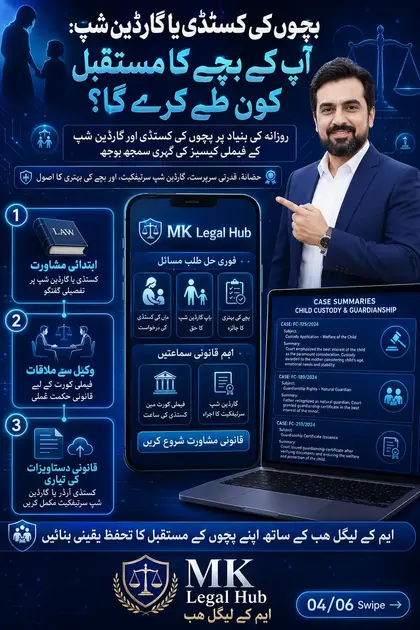
Child Custody vs Guardianship in Pakistan: What is the Difference? Complete Comparison (2026)
Your child is the most important person in your life. When a family separates, the question of who will care for the child becomes central. Many parents confuse Child Custody and Guardianship. They are not the same thing. One deals with who the child lives with and who provides daily care. The other deals with who has the legal authority to make decisions for the child and manage the child's property. This guide explains the difference between Child Custody vs Guardianship in Pakistan, who is the natural guardian, what rights mothers and fathers have, and what the law says about the welfare of the child. Written with the care that your child deserves.
Child Custody vs Guardianship in Pakistan: Quick Legal Answer
Child Custody is the right to the physical care and possession of the child – where the child lives and who provides daily care. In Pakistan, custody is decided by the Family Court based on the welfare of the child, and young children are usually placed with the mother. Guardianship is broader. It is the legal authority to make decisions about the child's upbringing, education, religion, and property. The father is the natural guardian under Muslim law. In child custody vs guardianship in Pakistan: custody is about who the child lives with. Guardianship is about who holds legal authority over the child. A mother may have custody, but the father remains the guardian. Both are subject to the overriding principle of the child's welfare.
1. Side-by-Side Comparison Table: Child Custody vs Guardianship in Pakistan
| Factor | Child Custody | Guardianship |
|---|---|---|
| Definition | Right to physical care and possession of the child | Legal authority over the child's person and property |
| Who Decides | Family Court, based on welfare of the child | Family Court for certificates, but father is natural guardian |
| Who Usually Gets It | Mother (for young children), father (for older children) | Father (natural guardian), grandparents (if appointed) |
| Focus | Daily care, living arrangements, upbringing | Legal decisions, property management, education, religion |
| Duration | Can change as child grows | Usually permanent until child reaches majority |
| Legal Basis | Guardian and Wards Act 1890 | Guardian and Wards Act 1890, Muslim Personal Law |
| Court Order | Custody Order from Family Court | Guardianship Certificate from Family Court |
| Can Mother Get It | Yes, and usually gets it for young children | Yes, but father remains primary natural guardian |
| Can Father Get It | Yes, especially for older children | Yes, father is the natural guardian |
| Welfare Principle | Overriding consideration | Applies in all decisions |
| Best For | Determining who the child lives with | Legal authority and property management |
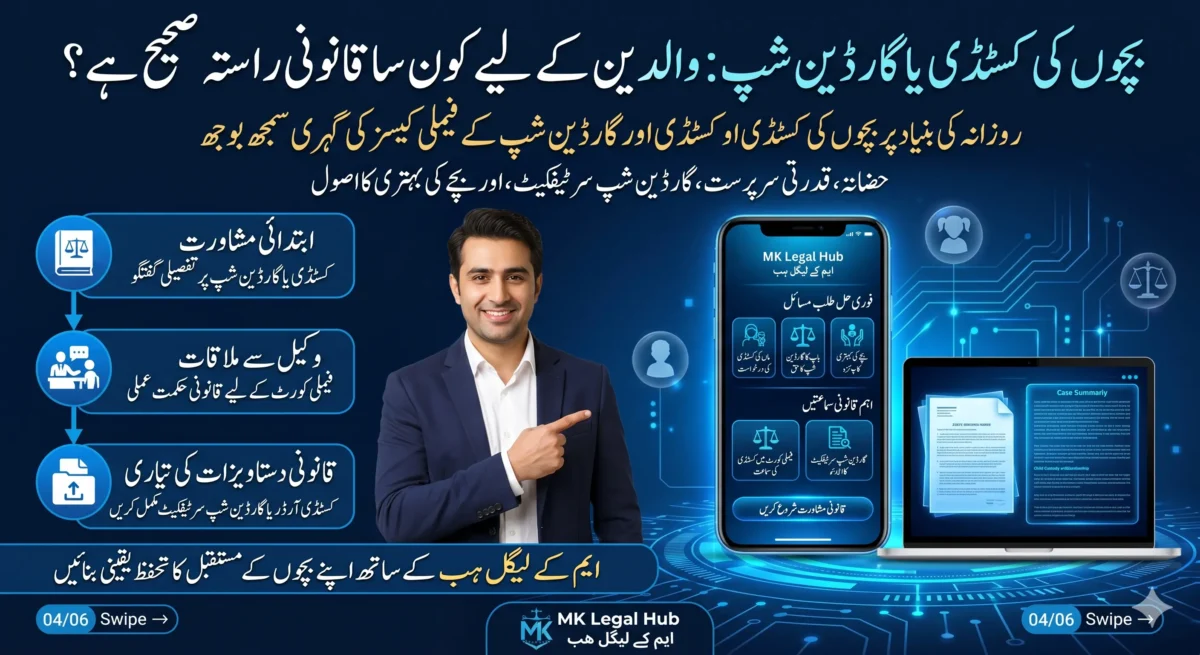
2. What is Child Custody in Pakistan? Understanding Child Custody vs Guardianship
Child custody refers to the right and responsibility of a parent (or another person) to have the child live with them and to provide daily care. In Pakistan, custody matters are decided by the Family Court under the Guardian and Wards Act 1890. The most important principle is the welfare of the child. When considering child custody vs guardianship in Pakistan, remember that custody is about physical care.
✅ Mother's Right to Custody (Hizanat)
Under Muslim personal law, the mother has the primary right to custody of young children. For boys, this is typically until age 7. For girls, until puberty. This is called Hizanat. Read: Child Custody Law Complete Guide.
✅ Father's Right After Hizanat
After the mother's period of custody ends, the father becomes the primary custodian, especially for boys. The court considers the child's wishes as they grow older.
✅ Welfare Principle
The court can override the usual rules if the child's welfare requires it. If the mother is unfit, custody can be denied. If the father is abusive, custody goes to the mother or another suitable guardian.
✅ Custody and Visitation
Even when one parent has custody, the other parent usually has the right to visitation. Read: How to Win Child Custody Case.
بچوں کی کسٹڈی کیا ہے؟ بچوں کی کسٹڈی سے مراد بچے کی جسمانی دیکھ بھال اور اس کے پاس رہنے کا حق ہے۔ پاکستان میں، کسٹڈی کا فیصلہ فیملی کورٹ بچے کی بہتری کی بنیاد پر کرتی ہے۔ ماں کو چھوٹے بچوں کی کسٹڈی کا بنیادی حق ہے (حضانۃ) – لڑکوں کے لیے 7 سال تک اور لڑکیوں کے لیے بلوغت تک۔
3. What is Guardianship in Pakistan? Child Custody vs Guardianship Explained
Guardianship is a broader legal concept than custody. It refers to the legal authority to make decisions about a child's life – including education, religion, medical treatment, and property management. In the context of child custody vs guardianship in Pakistan, guardianship is the more powerful legal status.
✅ Natural Guardian
The father is the natural guardian of his legitimate children under Muslim personal law. Even after divorce, the father remains the guardian, while custody may go to the mother.
✅ Guardianship Certificate
A Guardianship Certificate is a court document that formally recognizes a person as the guardian of a minor. Essential for property matters, inheritance, and taking a child abroad.
✅ Grandparents as Guardians
If the father is deceased or unfit, the court can appoint the grandfather or another relative as guardian. The mother can also apply for guardianship, particularly for managing the child's inheritance.
✅ Guardianship and Property
A guardian has the authority to manage the child's property and finances. However, the court supervises major transactions to protect the child's interests.
گارڈین شپ کیا ہے؟ گارڈین شپ کسٹڈی سے زیادہ وسیع قانونی تصور ہے۔ باپ نابالغ بچے کا قدرتی سرپرست ہے، چاہے بچے کی کسٹڈی ماں کے پاس ہو۔ گارڈین شپ سرٹیفکیٹ جائیداد کے لین دین، وراثت، اور بچے کو بیرون ملک لے جانے کے لیے لازمی ہے۔
4. Who is the Natural Guardian? Child Custody vs Guardianship Strength Comparison
The father is the natural guardian. Under Muslim personal law, the father is the primary and natural guardian of his minor children. This guardianship is inherent and does not require a court order. The mother can be appointed as guardian by the court, but she does not automatically become the natural guardian upon the father's death – the grandfather may be preferred.
Guardianship is broader and stronger than custody. Custody deals only with the child's physical care and living arrangements. Guardianship encompasses custody but also extends to legal decision-making and property management. A guardian can make decisions that a custodian cannot – for example, enrolling the child in a specific school, consenting to medical treatment, or managing the child's inheritance.
However, both are subject to the welfare principle. The Family Court can modify or override both custody and guardianship arrangements if the child's welfare demands it. This is the most important principle in Pakistani family law regarding children. Read: Child Custody Law in Pakistan: Complete Guide.
قدرتی سرپرست کون ہے؟ باپ قدرتی سرپرست ہے۔ مسلم پرسنل لاء کے تحت، باپ اپنے نابالغ بچوں کا بنیادی سرپرست ہے۔ گارڈین شپ کسٹڈی سے زیادہ مضبوط ہے کیونکہ یہ بچے کی جائیداد اور زندگی کے بڑے فیصلوں تک پھیلی ہوئی ہے۔ تاہم، دونوں بچے کی بہتری کے اصول کے تابع ہیں۔
5. Common Mistakes Parents Make in Child Custody vs Guardianship Cases
❌ Confusing Custody with Guardianship
Many parents think having physical custody means full legal authority. This is incorrect. A mother with custody may still need the father's consent (as guardian) for major decisions.
❌ Thinking Mother Automatically Becomes Guardian
After the father's death, guardianship passes to the grandfather or another male relative, not automatically to the mother. The mother must apply to the court.
❌ Not Obtaining a Guardianship Certificate
A Guardianship Certificate is essential for property transactions, inheritance claims, and taking the child abroad. Without it, the child's legal interests cannot be fully protected.
❌ Putting Parental Conflict Before Child's Welfare
Courts see through this. A parent who uses the child as a weapon in a marital dispute risks losing custody. Always focus on the child's best interests.
❌ Not Seeking Legal Advice Early
Custody and guardianship cases are emotionally draining and legally complex. Early consultation with a family lawyer can clarify rights and prevent mistakes.
عام غلطیاں: کسٹڈی کو گارڈین شپ سمجھ لینا، باپ کی وفات کے بعد ماں کا خود بخود سرپرست بننے کا غلط خیال، گارڈین شپ سرٹیفکیٹ حاصل نہ کرنا، بچے کو والدین کے تنازع میں استعمال کرنا، اور جلد قانونی مشورہ نہ لینا۔
6. بچوں کی کسٹڈی یا گارڈین شپ: عام پاکستانی والدین کے لیے اردو راہنما
جب خاندان ٹوٹتا ہے تو بچوں کا مستقبل سب سے بڑا سوال بن جاتا ہے۔ پاکستانی قانون میں دو اہم تصورات ہیں: بچوں کی کسٹڈی اور گارڈین شپ۔
بچوں کی کسٹڈی کیا ہے؟
بچوں کی کسٹڈی کا مطلب ہے کہ بچہ کس کے ساتھ رہے گا، کون اسے روزانہ کھانا دے گا، اسکول بھیجے گا، اور اس کی پرورش کرے گا۔ چھوٹے بچوں کی کسٹڈی عام طور پر ماں کو ملتی ہے (حضانۃ)۔
گارڈین شپ کیا ہے؟
گارڈین شپ کا مطلب ہے بچے پر قانونی اختیار – تعلیم، مذہب، جائیداد، اور اہم فیصلوں کا حق۔ باپ قدرتی سرپرست ہے۔
اہم باتیں جو والدین کو جاننی چاہئیں
- ماں کے پاس کسٹڈی ہو سکتی ہے، لیکن باپ پھر بھی سرپرست رہتا ہے
- بچے کی بہتری سب سے اوپر ہے – عدالت وہی کرے گی جو بچے کے لیے بہتر ہے
- گارڈین شپ سرٹیفکیٹ کے بغیر بچے کی جائیداد یا بیرون ملک سفر مشکل ہے
- بچے کو تنازع میں مت ڈالیں – اس کا نقصان بچے اور آپ دونوں کو ہوگا
7. Frequently Asked Questions: Child Custody vs Guardianship in Pakistan
Q1: What is the difference between child custody and guardianship in Pakistan? +
Custody is about who the child lives with and who provides daily care. Guardianship is about legal authority over the child's life decisions and property. A mother may have custody while the father remains the guardian.
Q2: Who is the natural guardian of a child in Pakistan? +
The father is the natural guardian under Muslim personal law. After the father's death, guardianship passes to the grandfather or another male relative, not automatically to the mother.
Q3: Can a mother get guardianship of her child? +
Yes, the mother can apply to the Family Court for a guardianship certificate, especially if the father is deceased, absent, or unfit. The court will decide based on the child's welfare.
Q4: At what age does a child get to choose which parent to live with? +
There is no fixed age in Pakistani law, but courts consider the child's wishes as they grow older, especially after age 12 or 14. The welfare principle remains paramount.
Q5: Can a mother lose custody of her child? +
Yes. If the mother is proven unfit – due to neglect, abuse, immoral lifestyle, or remarriage to a stranger – the court can transfer custody to the father or another guardian.
Q6: کسٹڈی اور گارڈین شپ میں کیا فرق ہے؟ +
Q7: کیا ماں بچے کی گارڈین بن سکتی ہے؟ +
Q8: بچوں کی کسٹڈی کا فیصلہ کون کرتا ہے؟ +

Chief Atta Ullah Baloch
Senior Advocate High Court · 25+ Years · Quetta & Mastung
"In my 25 years of practice in Family Courts across Balochistan, the most heartbreaking cases I see are those where children are caught between warring parents. The law is clear: the child's welfare comes first. Always. I have seen mothers who are wonderful caregivers lose custody because they tried to deny the father his rights as guardian. The court looks at one thing: what is best for the child. My advice to every parent is this: do not use your child as a weapon. Do not speak ill of the other parent in front of the child. And if you are seeking custody or guardianship, get proper legal advice."

Fighting for Your Child? Get Expert Legal Guidance
Your child's future is too important to leave to chance. Whether you are seeking custody, guardianship, or both, the right legal strategy can make all the difference.
📱 WhatsApp: 03414834719 📧 Schedule Consultation