Complete Criminal Trial Process in Pakistan (FIR to Judgment Guide 2026)
Criminal trial process in Pakistan — understand every stage from FIR to judgment under CrPC & Qanun-e-Shahadat. Expert guide by Chief Atta Ullah Baloch, Senior Advocate High Court, Mastung, Balochistan.
Criminal trial process in Pakistan consists of 8 stages: (1) FIR registration under S.154 CrPC, (2) Investigation & Challan (S.156, 173), (3) Supply of documents (S.265-C), (4) Framing of charge, (5) Prosecution evidence & cross-examination under Article 133 QSO, (6) Defence evidence, (7) Final arguments, (8) Judgment under S.366-367 CrPC. Cross-examination is the most critical stage — most cases are won or lost here. For detailed FIR procedures, see FIR & Police Guide.
⚡ Criminal Trial Process in Pakistan – Key Takeaways
1. FIR Registration – Section 154 CrPC
Criminal trial process in Pakistan ka pehla aur sab se ahem marhala First Information Report (FIR) ka indiraj hai. Jab bhi koi qabil-e-dast-andazi (cognizable) jurm hota hai — jaise qatl, dacoity, ya cheating — to police ke paas FIR darj karne ke siwa koi chara nahi hota. Yeh Section 154 CrPC ke tahat farz hai.
FIR woh buniyad hai jis par poora muqaddama khara hota hai. Agar FIR mein tafseelat ghalat hain, waqia ka waqt ghalat likhwaya gaya, ya gawahon ke naam ghalat darj hain — to yeh bachao ke wakil ke liye pehla hamla hota hai. Is liye humne 7 Deadly FIR Filing Mistakes par ek mukammal guide likhi hai.
Police FIR darj karne se inkar nahi kar sakti. Agar SHO inkar kare to aap Section 22-A/B CrPC ke tahat Session Judge (Justice of Peace) ke paas darkhwast de sakte hain. Mazeed tafseel ke liye dekhein FIR & Police Procedures Guide.
2. Investigation & Challan – Sections 156 & 173 CrPC
FIR darj hone ke baad, Investigating Officer (IO) ka kaam shuru hota hai. Woh waqia ki jagah ka muaina karta hai, gawahon ke bayanaat Section 161 CrPC ke tahat record karta hai, aur documentary ya forensic saboot jama karta hai. Agar yeh investigation kamzor rahi to sara muqaddama kamzor par jayega.
Jab investigation mukammal ho jaye — ya agar 14 din ke andar mukammal na ho to interim report deni hoti hai — to police apni final report (Challan) Section 173 CrPC ke tahat magistrate ki adalat mein pesh karti hai. Challan mein yeh bataya jata hai ke jurm banta hai ya nahi, aur kaun kaun mulzim hain.
Saboot ki hifazat (chain of custody) ke liye dekhein Chain of Custody Guide.
3. Supply of Documents – Section 265-C CrPC
Yeh woh marhala hai jo fair trial (munsifana muqaddama) ki guarantee hai. Section 265-C CrPC ke tahat, mulzim ko — ya uske wakil ko — FIR ki copy, tamam gawahon ke 161 CrPC ke bayanaat, aur jitne bhi documentary saboot hain, unki copies faraham ki jati hain.
Yeh Article 10A of the Constitution of Pakistan ke tahat buniyadi haq hai. Agar mulzim ko saboot nahi diye gaye to woh apna defence theek se nahi kar sakta — aur yeh appeal mein ek strong ground hai.
4. Framing of Charge – Sections 242 / 265 CrPC
Jab saboot mulzim ko faraham ho jate hain, to court charge frame karti hai. Iska matlab yeh hai ke judge mulzim ke khilaf lagaye gaye ilzamaat ko parh kar sunata hai, unhein samjhata hai, aur phir mulzim se poochta hai: "Aap ne jurm kiya hai ya nahi — guilty ya not guilty?"
Yeh marhala is liye intehai ahem hai kyunki isse trial ka daira (scope) mutayyan hota hai. Court sirf unhi ilzamaat par trial chalayegi jo charge mein shamil hain.
5. Prosecution Evidence & Cross-Examination – Articles 132 & 133 QSO
Ab trial ka sab se nazuk aur faisla kun marhala shuru hota hai. Istighasa (prosecution) apne gawah pesh karta hai. Har gawah ke saath teen kaam hote hain:
1. Examination-in-Chief: Istighasa ka wakil apne gawah se sawalat karta hai — gawah apni kahani bayan karta hai.
2. Cross-Examination (جرح): Article 133 QSO (Qanun-e-Shahadat Order 1984) ke tahat, bachao ka wakil istighasa ke gawah se sawalat karta hai. Yahi woh hatyar hai jisse gawah ki sachchai parakhi jati hai. Agar bachao ka wakil hoshiyar hai to woh gawah ke bayan mein contradictions (tazad) pakarta hai, uski maujoodgi ko shak mein dalta hai, aur uski bias (tarafdari) ko zahir karta hai.
3. Re-Examination: Agar cross-examination mein koi nayi baat nikli ho to istighasa dobara sawal kar sakta hai — lekin naye facts nahi la sakta.
⚠️ Key Rule (Most People Ignore): The case is often decided during cross-examination of prosecution witnesses — not at the end. If cross-examination is weak or mishandled, the defence case becomes nearly impossible to recover.
Cross-examination ki expert techniques ke liye zaroor dekhein: Golden Rules of Cross-Examination in Pakistan.
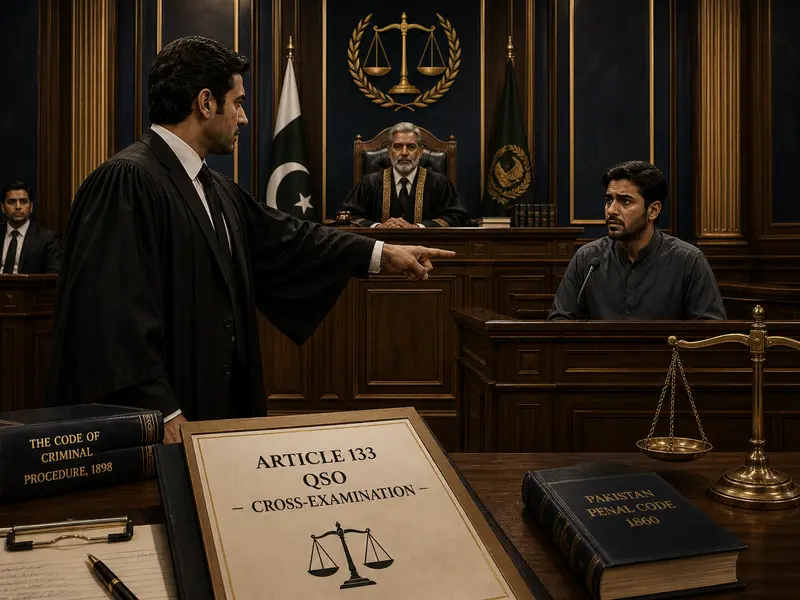
Criminal trial process in Pakistan: Cross-examination under Article 133 QSO — the most decisive phase of any criminal trial.
پاکستان میں فوجداری مقدمے کا عمل — آرٹیکل 133 کیو ایس او کے تحت جرح، کسی بھی مقدمے کا سب سے فیصلہ کن مرحلہ۔
6. Defence Evidence – Section 340(2) CrPC
Jab istighasa apne tamam gawah pesh kar chukay, to ab bachao (defence) ki bari aati hai. Section 340(2) CrPC ke tahat, mulzim khud apna bayan de sakta hai — lekin ussey qasam nahi khani padti (he is not on oath). Woh chup bhi reh sakta hai, kyunki Article 13 Constitution ke tahat kisi ko apne khilaf gawahi dene par majboor nahi kiya ja sakta.
Mulzim chahe to apne defence witnesses bhi pesh kar sakta hai — lekin yeh zaroori nahi. Aksar wukla istighasa ke gawahon ko cross-examination mein hi kamzor kar dete hain aur defence evidence nahi dete. Yeh ek strategic decision hai.
7. Final Arguments
Jab sab gawah pesh ho jate hain aur saboot mukammal ho jata hai, to dono taraf ke wukla final arguments (hatmi dalail) pesh karte hain. Yeh woh waqt hai jahan strategy meets persuasion — wakil ko chahiye ke woh mukhtasar, mawassar, aur qanooni nuqta-e-nazar se mazboot daleel de.
Final arguments mein wakil apni taraf ki story sunata hai — gawahon mein tazad, saboot ki kami, aur Supreme Court ki nazirein pesh karta hai. Judge ke saamne ab poori tasweer aa chuki hoti hai.
8. Judgment – Sections 366 & 367 CrPC
Akhir mein, court apna faisla (judgment) sunati hai. Section 366 CrPC ke tahat, faisla likha jata hai — usmein charges, saboot ka jaiza, aur judge ki reasoning shamil hoti hai. Section 367 CrPC ke tahat, agar mulzim ko saza hoti hai to saza ka elan kiya jata hai.
Faisla ya to acquittal (bari) hota hai ya conviction (saza). Agar mulzim ko saza hoti hai to woh appeal kar sakta hai — jiske liye Bail & Appeals Guide dekhein.
Complete 8-Stage Summary Table
| # | Stage | CrPC Section | Key Action |
|---|---|---|---|
| 1 | FIR Registration | S.154 | Police records information about cognizable offence |
| 2 | Investigation & Challan | S.156, 173 | IO investigates; submits final report to magistrate |
| 3 | Supply of Documents | S.265-C | Accused gets copies of all prosecution evidence |
| 4 | Framing of Charge | S.242/265 | Court reads charges; accused pleads guilty/not |
| 5 | Prosecution Evidence & Cross-Examination | Art.133 QSO | Witnesses examined, cross-examined, re-examined |
| 6 | Defence Evidence | S.340(2) | Accused may present statement or defence witnesses |
| 7 | Final Arguments | — | Both sides summarise their case before the judge |
| 8 | Judgment | S.366-367 | Court delivers acquittal or conviction |
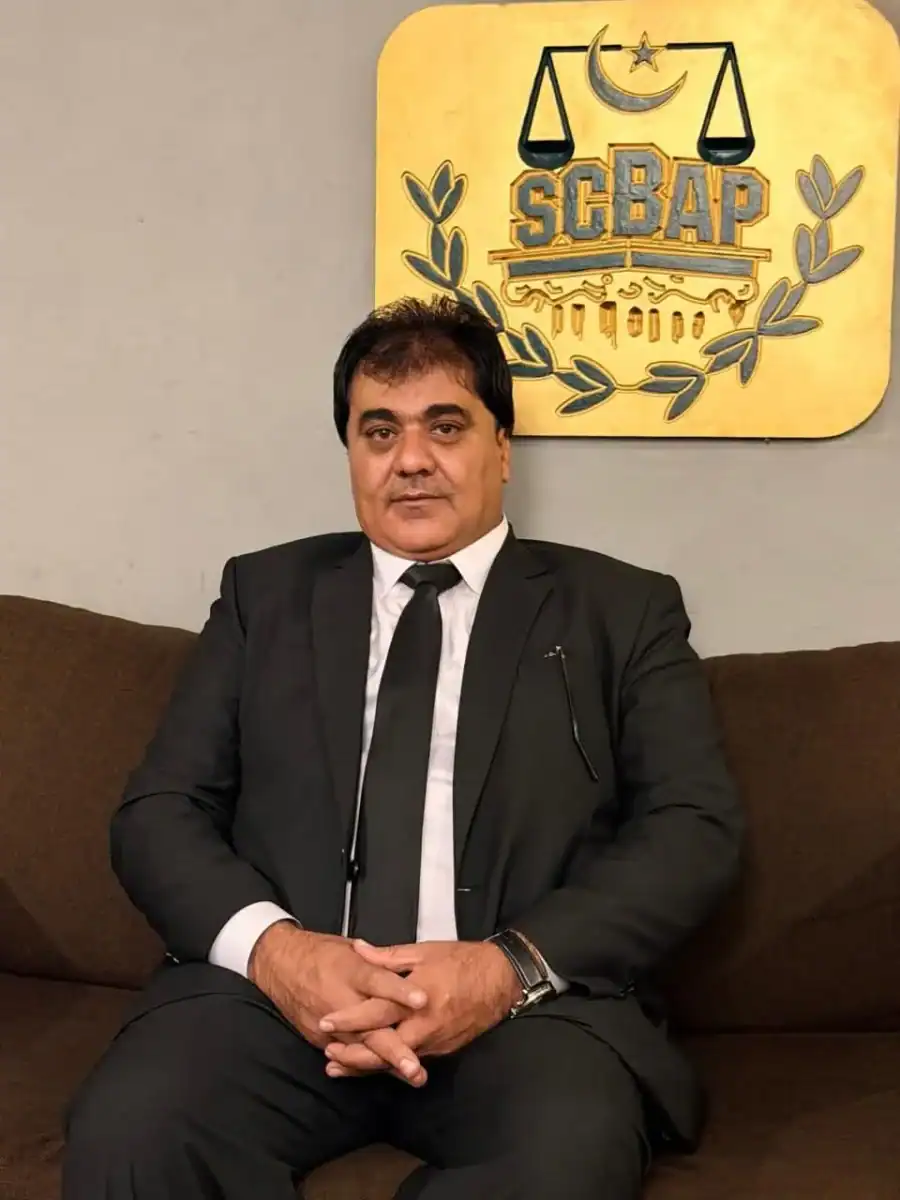
Chief Atta Ullah Baloch
Senior Advocate High Court | MK Legal Hub | 35+ Years Experience
"Most cases are lost not because of weak facts — but because of poor handling of procedure. Understanding the criminal trial process in Pakistan is the first step to winning. Master cross-examination, and you master the trial. I've seen cases where a 5-minute cross-examination destroyed months of prosecution preparation. Know the stages, respect the procedure, and never underestimate the power of a well-timed objection."
Frequently Asked Questions (FAQs)
Need Court-Ready Drafts for Your Trial?
اپنے مقدمے کے لیے عدالتی ڈرافٹس چاہیے؟
Use our professional legal drafting service or try smart legal tools for instant drafts.