Fraud Law in Pakistan – PPC Sections 421-424, FIR, Bail & Defence (2026)
Fraud law in Pakistan — a complete bilingual guide covering fraudulent deeds, property disposal fraud, FIR procedure, bail eligibility, compoundability, and comparison with Cheating Law. By Chief Atta Ullah Baloch, Senior Advocate High Court with 25+ years of criminal defence experience.
Fraud law in Pakistan: Governed by Sections 421-424 PPC covering dishonest removal, concealment, or transfer of property with intent to defraud creditors. Distinguished from cheating (S.415-420 PPC) — fraud targets property disposition against creditors; cheating requires deception + inducement of a person. Max punishment: 2 years (421-424), or 7 years if coupled with Section 420 PPC.
⚡ Fraud Law in Pakistan – Key Takeaways
1. What Is Fraud Under the Pakistan Penal Code?
Fraud law in Pakistan is primarily codified under Sections 421 to 424 of the Pakistan Penal Code, 1860. These provisions target dishonest and fraudulent acts concerning property — specifically the removal, concealment, or transfer of property with the intent to prevent its distribution among creditors or legal heirs. Unlike cheating (Section 415 PPC), which requires deception of a person leading to delivery of property, fraud under these sections focuses on the dishonest disposition of property itself. The offence is complete the moment property is removed or concealed with fraudulent intent — irrespective of whether any individual was personally deceived.
پاکستان پینل کوڈ 1860 کی دفعات 421 سے 424 فراڈ کے قانون کی بنیاد ہیں۔ یہ دفعات جائیداد کے بے ایمانانہ اور دھوکہ دہی پر مبنی اقدامات کو نشانہ بناتی ہیں — خاص طور پر قرض دہندگان یا قانونی ورثاء سے جائیداد چھپانے، منتقل کرنے یا ختم کرنے کے عمل کو۔ دھوکہ دہی (دفعہ 415 PPC) کے برعکس جس میں کسی شخص کو دھوکہ دے کر جائیداد حاصل کی جاتی ہے، فراڈ میں اصل جرم جائیداد کا بے ایمانی سے تصرف ہے۔ یہ جرم اسی لمحے مکمل ہو جاتا ہے جب جائیداد کو فراڈ کی نیت سے چھپایا یا منتقل کیا جائے — چاہے کسی فرد کو ذاتی طور پر دھوکہ نہ بھی دیا گیا ہو۔
⚖️ Section 421 PPC: Whoever dishonestly or fraudulently removes, conceals, or delivers to any person any property without adequate consideration, intending thereby to prevent its distribution among his creditors, shall be punished with imprisonment of either description for a term which may extend to 2 years, or with fine, or with both.
⚖️ دفعہ 421 PPC: جو شخص بے ایمانی یا دھوکہ دہی سے کسی جائیداد کو ہٹائے، چھپائے، یا کسی شخص کو بغیر مناسب معاوضے کے منتقل کرے، اس نیت سے کہ اس کی تقسیم قرض دہندگان میں نہ ہو سکے، اسے 2 سال تک قید، جرمانہ، یا دونوں سزائیں دی جا سکتی ہیں۔
2. Complete PPC Sections Governing Fraud
Fraud law in Pakistan spans four key sections, each addressing a distinct type of fraudulent conduct related to property:
| Section | Offence (English) | جرم (اردو) | Punishment | Bailable? |
|---|---|---|---|---|
| 421 | Dishonest removal of property to defraud creditors | قرض داروں کو دھوکہ دینے کے لیے جائیداد کا بے ایمانی سے خاتمہ | Up to 2 years + fine | ✔️ Bailable |
| 422 | Dishonestly preventing debt from being available to creditors | قرض کی دستیابی کو بے ایمانی سے روکنا | Up to 2 years + fine | ✔️ Bailable |
| 423 | Fraudulent execution of deed containing false statement | جھوٹے بیان پر مشتمل دستاویز کا دھوکہ دہی سے اجراء | Up to 2 years + fine | ✔️ Bailable |
| 424 | Fraudulent concealment or removal of property | جائیداد کا دھوکہ دہی سے چھپانا یا ختم کرنا | Up to 2 years + fine | ✔️ Bailable |
For larger fraud schemes involving deception of individuals and delivery of property, prosecutors often couple these sections with Section 420 PPC, which carries up to 7 years imprisonment. See our Cheating Law in Pakistan guide for how Section 420 is applied. Need professionally drafted legal documents? Our Virtual Clerk Service delivers court-ready fraud complaints and bail petitions. Explore our complete legal drafting resources for templates and guides.
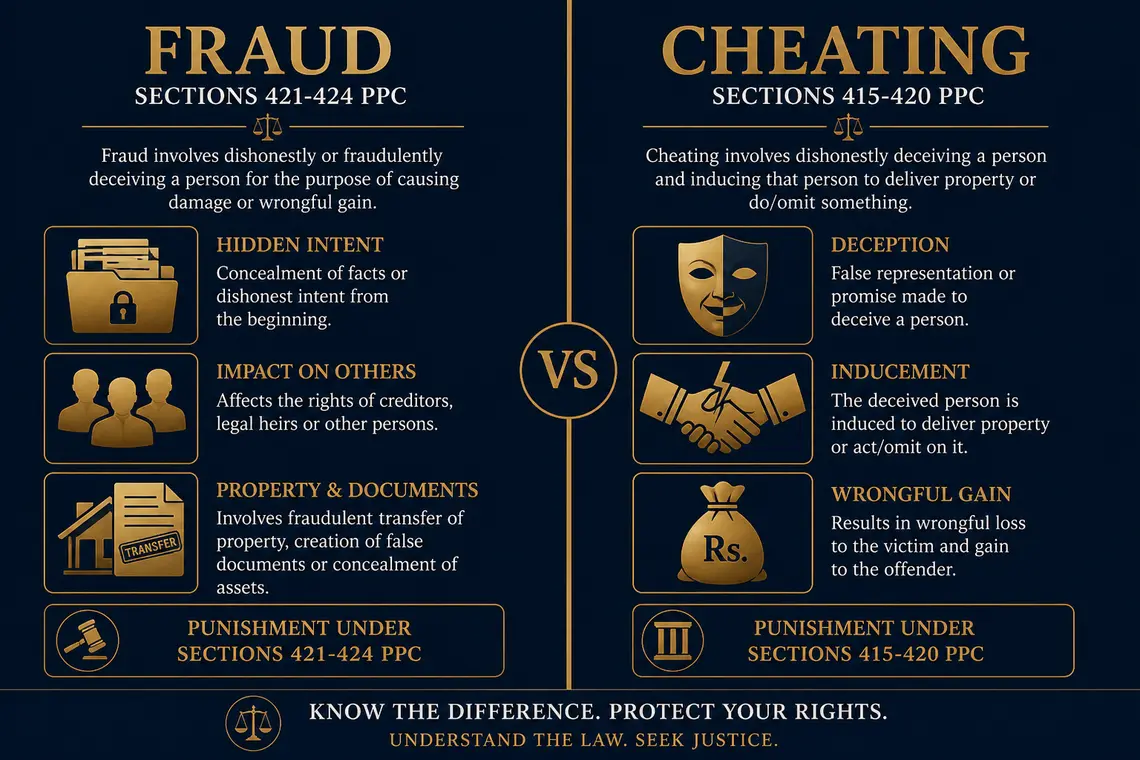
Fraud Law (S.421-424 PPC) vs Cheating Law (S.415-420 PPC) — critical distinctions every lawyer and litigant must understand.
فراڈ کا قانون (دفعات 421-424) بمقابلہ دھوکہ دہی کا قانون (دفعات 415-420) — اہم فرق جو ہر وکیل اور فریق مقدمہ کو سمجھنا چاہیے۔
3. Fraud vs Cheating — The Critical Legal Distinction
In Pakistani criminal law, fraud law in Pakistan and cheating law are frequently confused — but they are legally distinct offences with different ingredients, procedures, and punishments. Understanding this distinction can mean the difference between bail and jail, between acquittal and conviction.
| Element / عنصر | Fraud (421-424 PPC) | Cheating (415-420 PPC) |
|---|---|---|
| Focus / مرکز | Property disposition against creditors | Deception + inducement of a person |
| Victim / متاثرہ | Creditors or legal heirs | Any person deceived |
| Deception Required? | Not necessarily — dishonest intent suffices | Yes — deception is an essential ingredient |
| Property Delivery? | Property is removed/concealed — not necessarily delivered to anyone | Property must be delivered due to deception |
| Max Punishment | 2 years (under 421-424 alone) | 7 years (under 420) |
| Bailable? | ✔️ Generally bailable | ❌ Non-bailable under 420 |
پاکستانی فوجداری قانون میں فراڈ اور دھوکہ دہی اکثر ایک ہی سمجھے جاتے ہیں — لیکن قانونی طور پر یہ الگ الگ جرائم ہیں۔ فراڈ میں جائیداد کا بے ایمانی سے تصرف مرکزی عنصر ہے، جبکہ دھوکہ دہی میں کسی شخص کو دھوکہ دے کر جائیداد کا حصول ضروری ہے۔ اس فرق کو سمجھنا ضمانت، سزا، اور مقدمے کی حکمت عملی کا فیصلہ کرتا ہے۔ یہی وہ قانونی نکتہ ہے جس پر سینکڑوں مقدمات میں ضمانت منظور یا مسترد ہوئی ہے۔
⚠️ Critical Warning: I have seen countless cases where the prosecution charged fraud under Section 420 when the facts only supported Sections 421-424 — or vice versa. A wrong section can mean the accused gets bail as a matter of right when the prosecution intended a non-bailable offence. Always verify the legal ingredients before filing or defending. — Chief Atta Ullah Baloch
4. Essential Ingredients of Fraud Under PPC
4.1 Dishonest or Fraudulent Intent
The cornerstone of fraud law in Pakistan under Sections 421-424 is dishonest intention. The prosecution must prove that the accused acted with the specific intent to defraud creditors or prevent lawful distribution. Without proof of dishonest intent, the charge collapses. A mere transfer of property — even if it disadvantages creditors — is not criminal fraud unless accompanied by dishonest intent. This is the most common defence in fraud cases.
دفعات 421-424 کے تحت فراڈ کی بنیاد بے ایمانی کی نیت ہے۔ استغاثہ کو یہ ثابت کرنا ہوتا ہے کہ ملزم نے قرض داروں کو دھوکہ دینے یا جائیداد کی قانونی تقسیم کو روکنے کی مخصوص نیت سے کام لیا۔ بغیر بے ایمانی کی نیت ثابت کیے فراڈ کا الزام نہیں ٹھہر سکتا۔ جائیداد کی محض منتقلی — چاہے اس سے قرض داروں کو نقصان ہی کیوں نہ ہو — فوجداری فراڈ نہیں جب تک بے ایمانی کی نیت ساتھ نہ ہو۔
4.2 Act of Removal, Concealment, or Transfer
The prosecution must establish that the accused actually removed, concealed, or transferred property. The act must be voluntary and deliberate. The property can be movable (cash, vehicles, goods) or immovable (land, buildings). Importantly, the transfer can be to any person — including family members or associates — if done with fraudulent intent.
استغاثہ کو یہ ثابت کرنا ہوگا کہ ملزم نے حقیقت میں جائیداد کو ہٹایا، چھپایا، یا منتقل کیا۔ یہ فعل رضاکارانہ اور جان بوجھ کر ہونا چاہیے۔ جائیداد منقولہ (نقدی، گاڑیاں، سامان) یا غیر منقولہ (زمین، عمارات) ہو سکتی ہے۔ اہم بات یہ ہے کہ منتقلی کسی کو بھی کی جا سکتی ہے — بشمول خاندان کے افراد یا ساتھی — اگر فراڈ کی نیت سے کی گئی ہو۔
4.3 Absence of Adequate Consideration
Under Section 421, the transfer or delivery must be without adequate consideration. If the accused sold property at fair market value — even to avoid creditors — this may not constitute fraud under Section 421. The absence of fair value is evidence of dishonest intent, but it is not conclusive by itself.
4.4 Intention to Prevent Distribution Among Creditors
This is the most specific element. The property must have been removed with the intention of preventing its lawful distribution among creditors. If the accused had other legitimate reasons for the transfer — such as paying another genuine debt — the element of "preventing distribution" may be missing.
📘 Legal Note: For cases involving deception of individuals resulting in property delivery — including fake investment schemes, false company registrations, or forged documents — the appropriate charge is cheating under Section 420 PPC, not fraud under 421-424. See our Cheating Law in Pakistan guide.
📝 Need a Court-Ready Fraud Complaint or Recovery Petition?
Don't risk rejection from poorly drafted applications. Our Virtual Clerk Service delivers professionally formatted fraud complaints, recovery petitions, and legal notices — ready within 24 hours. Also explore free templates & smart drafting tools.
5. FIR and Investigation in Fraud Cases
5.1 Is Fraud Cognizable?
Offences under Sections 421-424 PPC are generally non-cognizable — meaning the police cannot arrest without a warrant and require a Magistrate's permission under Section 155 CrPC to investigate. However, if the fraud charge is coupled with Section 420 PPC, the case becomes cognizable, and the police can register an FIR under Section 154 CrPC and arrest without a warrant.
دفعات 421-424 PPC کے تحت فراڈ عام طور پر ناقابلِ گرفتاری جرم ہے — پولیس بغیر وارنٹ گرفتار نہیں کر سکتی اور تفتیش کے لیے مجسٹریٹ کی اجازت درکار ہوتی ہے۔ لیکن اگر دفعہ 420 PPC کے ساتھ ملایا جائے تو مقدمہ قابلِ گرفتاری بن جاتا ہے اور پولیس بغیر وارنٹ گرفتار کر سکتی ہے۔
5.2 How to File an FIR for Fraud
The informant must provide: (1) Details of the property in question; (2) Evidence of the accused's ownership or control over the property; (3) Proof of the removal, concealment, or transfer; (4) Evidence that creditors existed at the time of the act; (5) Documentary proof — property deeds, bank statements, transfer documents. For complete FIR procedures, see our FIR & Police Procedures Guide.
5.3 Documentary Evidence Is Primary
Fraud law in Pakistan cases are won or lost on documentary evidence. Essential documents include: registered property deeds (Registry Intiqal), bank records showing asset transfers, loan agreements and credit documentation, business financial statements, and communication records (emails, letters, messages). Oral testimony alone is rarely sufficient to prove fraudulent intent.
5.4 Investigation Process
Once an FIR is registered: (1) Investigation Officer collects documentary evidence; (2) Statements under Section 161 CrPC are recorded; (3) Accused may be arrested (if cognizable); (4) Final report (Challan) under Section 173 CrPC is submitted within 14 days. The accused may seek pre-arrest bail if Section 420 is applied.
6. Bail in Fraud Cases
6.1 Bailable vs Non-Bailable
Under Sections 421-424 PPC alone, fraud is bailable — the accused is entitled to bail as a matter of right upon furnishing surety bonds. However, when coupled with Section 420 PPC, the case becomes non-bailable and bail is at the court's discretion.
دفعات 421-424 PPC کے تحت فراڈ قابلِ ضمانت ہے — ملزم کو ضمانت کا حق حاصل ہے۔ لیکن دفعہ 420 PPC کے ساتھ ملا کر لگائے جانے پر مقدمہ ناقابلِ ضمانت بن جاتا ہے اور ضمانت عدالت کی صوابدید پر ہوتی ہے۔
6.2 Grounds for Bail in Non-Bailable Fraud
Courts consider these factors: (1) Whether the dispute is essentially civil — not criminal; (2) Whether the accused has settled with creditors; (3) Amount involved and degree of dishonesty; (4) Risk of the accused fleeing; (5) Whether evidence is documentary (already secured) — reducing the need for custody. For detailed bail strategies, see our Bail Laws in Pakistan guide.
6.3 Pre-Arrest Bail Strategy
Pre-arrest bail is possible even in Section 420 cases if the accused can demonstrate: (1) The complaint arises from a civil business dispute; (2) No dishonest intention existed at the time of the transaction; (3) Documentary evidence favours the accused; (4) The accused is willing to cooperate with investigation and is not a flight risk.
7. Compromise and Settlement in Fraud Cases
Fraud law in Pakistan under Sections 421-424 permits compounding — meaning the aggrieved party can settle the matter with the accused. If the accused pays the affected creditors, the court may allow compounding under Section 345 CrPC. However, if Section 420 PPC is involved and the state is considered a necessary party, compounding requires careful court scrutiny. The court must be satisfied that: (1) The compromise is voluntary — no duress or coercion; (2) All affected parties consent; (3) The offence is compoundable under the law; (4) The settlement is in the interest of justice.
دفعات 421-424 PPC کے تحت فراڈ قابلِ صلح ہے — متاثرہ فریق ملزم سے سمجھوتہ کر سکتا ہے۔ اگر ملزم قرض داروں کو معاوضہ ادا کر دے تو عدالت دفعہ 345 CrPC کے تحت مقدمہ ختم کر سکتی ہے۔ لیکن عدالت یہ تسلی ضرور کرتی ہے کہ سمجھوتہ رضاکارانہ ہے، کسی دباؤ کے تحت نہیں ہوا، اور تمام متاثرہ فریق اس پر راضی ہیں۔
8. Common Defences in Fraud Cases — 25 Years of Courtroom Strategy
8.1 Defence 1: No Dishonest Intent — Legitimate Business Transaction
This is the most powerful defence. The accused argues that the property transfer was a genuine business transaction conducted in the ordinary course — not to defraud creditors. Evidence: fair market value was paid, the transaction was properly documented, and there were valid commercial reasons for the transfer.
8.2 Defence 2: Civil Matter — Not Criminal Fraud
Many fraud complaints arise from failed business dealings or unpaid debts. The defence argues that the matter is a civil dispute over contractual obligations — not a criminal fraud. Pakistani courts have consistently held that criminal prosecution should not be used as a tool for debt recovery. If the accused can show that there is a genuine civil dispute over who is owed what, the criminal charge may be quashed.
8.3 Defence 3: Lack of Documentary Evidence
Since fraud cases rely heavily on documents, if the prosecution's documentary evidence is weak, contradictory, or incomplete, the defence can argue that the charge is not proven beyond reasonable doubt. Missing property deeds, incomplete bank records, or inconsistent financial statements can all create reasonable doubt.
8.4 Defence 4: Payment or Settlement Already Made
If the accused has already paid the creditors or settled the dispute — even after the FIR — this can be grounds for bail, compounding, or even acquittal. Courts generally look favourably on accused persons who have made genuine efforts to resolve the matter.
8.5 Defence 5: Prosecution Charged Wrong Section
As Chief Atta Ullah Baloch has argued successfully in numerous cases — if the facts show a civil dispute or a legitimate property transfer but the prosecution has charged Section 420 (cheating), the defence can argue that the essential ingredients of deception and inducement are missing. This can result in the charge being reduced to a bailable offence or the case being dismissed.
⚠️ 25-Year Courtroom Reality: In my career, the most common fraud defence that succeeds is proving the absence of dishonest intention at inception. If you can show the court that the transaction was genuine — even if it later disadvantaged creditors — the criminal charge fails. The prosecution must prove criminal intent; a failed business is not automatically a criminal enterprise. — Chief Atta Ullah Baloch, 25+ Years Experience
9. Fraud Cases in Mastung & Balochistan — Local Legal Representation
If you are facing a fraud case in Mastung, Quetta, or anywhere in Balochistan, local legal expertise is critical. MK Legal Hub provides comprehensive representation before: District Courts (Mastung, Quetta, and other Balochistan districts); Balochistan High Court (Quetta); Sessions Courts (bail and trial matters). Our services include: FIR drafting and legal complaint preparation; bail petition filing (pre-arrest and post-arrest); documentary evidence analysis; compromise and settlement negotiation; trial representation and appeal filing. Contact us for immediate legal assistance.
اگر آپ مستونگ، کوئٹہ، یا بلوچستان میں کہیں بھی فراڈ کے مقدمے کا سامنا کر رہے ہیں تو MK Legal Hub کی قانونی ٹیم آپ کی مدد کے لیے تیار ہے۔ ہم ضلعی عدالتوں، بلوچستان ہائی کورٹ، اور سیشن عدالتوں میں مکمل قانونی نمائندگی فراہم کرتے ہیں۔ ہماری خدمات میں ایف آئی آر اور قانونی شکایات کی تیاری، ضمانت کی درخواستیں، دستاویزی ثبوت کا تجزیہ، اور ٹرائل کی نمائندگی شامل ہے۔
10. Frequently Asked Questions (FAQs)
Both. PPC Sections 421-424 make certain fraudulent acts criminal offences punishable with imprisonment. However, many fraud-related disputes — particularly those arising from business transactions — also have a civil dimension (breach of contract, recovery suits). Courts distinguish based on criminal intent and quality of evidence.
دونوں۔ PPC کی دفعات 421-424 بعض فراڈ کو فوجداری جرم بناتی ہیں جس پر قید کی سزا ہو سکتی ہے۔ لیکن بہت سے فراڈ کے تنازعات — خاص طور پر کاروباری لین دین سے پیدا ہونے والے — دیوانی نوعیت کے بھی ہوتے ہیں۔ عدالتیں فوجداری نیت اور ثبوت کے معیار کی بنیاد پر فیصلہ کرتی ہیں۔
Under Sections 421-424 alone: up to 2 years imprisonment and fine. If coupled with Section 420 PPC (cheating with property delivery): up to 7 years imprisonment and fine. The actual sentence depends on the amount involved, the number of victims, and aggravating factors.
دفعات 421-424 کے تحت: 2 سال تک قید اور جرمانہ۔ اگر دفعہ 420 PPC کے ساتھ ملایا جائے: 7 سال تک قید اور جرمانہ۔ اصل سزا رقم، متاثرین کی تعداد، اور دیگر عوامل پر منحصر ہے۔
Yes. Fraud under Sections 421-424 is compoundable with court permission under Section 345 CrPC. If the accused compensates all affected creditors, the court may allow compounding. However, if Section 420 PPC is involved, the court will scrutinize the compromise more carefully, especially where the state is a necessary party.
ہاں۔ دفعات 421-424 کے تحت فراڈ قابلِ صلح ہے۔ اگر ملزم تمام متاثرہ قرض داروں کو معاوضہ ادا کر دے تو عدالت دفعہ 345 CrPC کے تحت صلح کی منظوری دے سکتی ہے۔
Documentary evidence is primary: property deeds, bank records, transfer documents, contracts, and financial statements. Witness testimony supports documents — it rarely suffices alone. Preserve all records, register property transactions, and maintain written communication with the accused.
دستاویزی ثبوت سب سے اہم ہے: جائیداد کی رجسٹری، بینک ریکارڈ، منتقلی کی دستاویزات، معاہدے، اور مالیاتی گوشوارے۔ گواہان کے بیانات دستاویزات کی تائید کرتے ہیں — اکیلے کافی نہیں ہوتے۔
Fraud (Sections 421-424) targets dishonest property disposition against creditors — deception of a person is not required. Cheating (Sections 415-420) requires deception + inducement + delivery of property by the deceived person. Fraud is generally bailable (2 years max); cheating under Section 420 is non-bailable (7 years max). See our detailed Cheating Law in Pakistan guide.
فراڈ (دفعات 421-424) جائیداد کے بے ایمانی سے تصرف کو نشانہ بناتا ہے — کسی شخص کو دھوکہ دینا ضروری نہیں۔ دھوکہ دہی (دفعات 415-420) کے لیے دھوکہ + ترغیب + جائیداد کی ترسیل ضروری ہے۔
Yes. Directors who personally participated in, authorized, or had knowledge of fraudulent acts can be prosecuted individually. Mere board membership without evidence of involvement is generally insufficient. The prosecution must prove the director's personal role in the fraudulent act.
ہاں۔ جو ڈائریکٹرز ذاتی طور پر فراڈ میں ملوث ہوں، یا جنہوں نے اس کی اجازت دی ہو، ان کے خلاف انفرادی طور پر مقدمہ چل سکتا ہے۔ محض بورڈ ممبرشپ بغیر ملوث ہونے کے ثبوت کے کافی نہیں۔

Chief Atta Ullah Baloch
Senior Advocate High Court | MK Legal Hub | 25+ Years Criminal Defence Experience
"Fraud law in Pakistan is one of the most misunderstood areas of criminal practice. In my 25+ years of defending clients, I have seen countless fraud cases filed that were really civil disputes — failed business deals dressed up as criminal complaints. The key distinction is always dishonest intention at the time of the act. If you transferred property for a genuine reason — even if it disadvantaged creditors — that is not criminal fraud. Always preserve your documentary evidence. Always verify the legal ingredients before filing or fighting. And never let the prosecution confuse fraud (421-424) with cheating (415-420) — that single distinction has secured bail for my clients when all seemed lost."
"پاکستان میں فراڈ کا قانون فوجداری پریکٹس کا سب سے زیادہ غلط سمجھا جانے والا شعبہ ہے۔ اپنے 25 سالہ کیریئر میں، میں نے بے شمار فراڈ کے مقدمات دیکھے جو درحقیقت دیوانی تنازعات تھے — ناکام کاروباری معاہدے جنہیں فوجداری مقدمے کا رنگ دیا گیا۔ اصل فرق ہمیشہ واقعے کے وقت بے ایمانی کی نیت کا ہوتا ہے۔ اگر آپ نے جائیداد کسی حقیقی وجہ سے منتقل کی — چاہے اس سے قرض داروں کو نقصان ہی کیوں نہ ہوا ہو — یہ فوجداری فراڈ نہیں ہے۔"