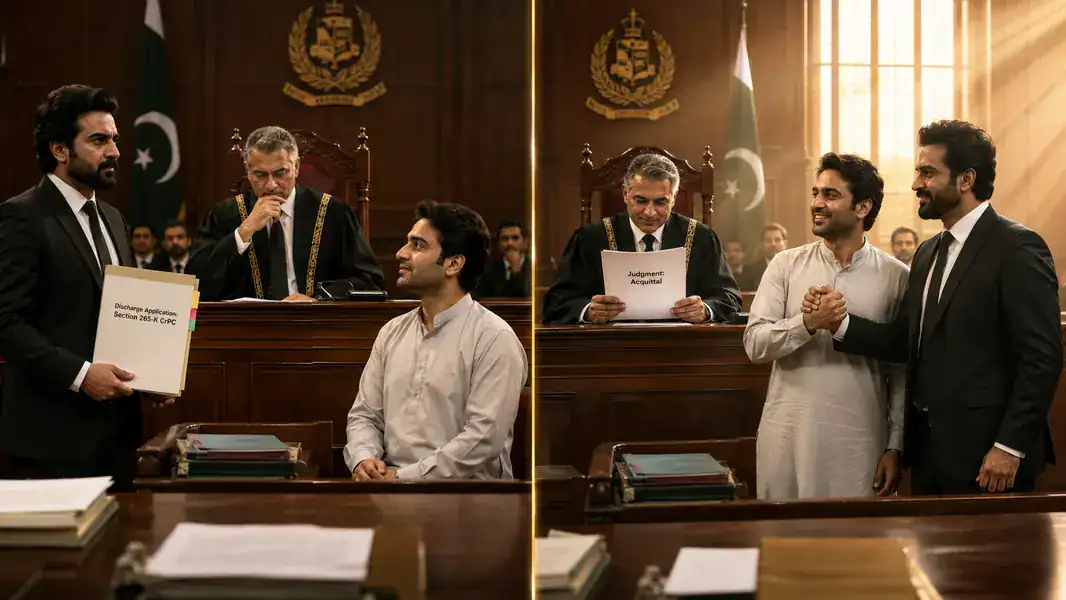
Discharge vs Acquittal in Pakistan: Section 265-K CrPC vs Final Judgment Complete Comparison (2026)
Your trial is ongoing. The prosecution's evidence is weak. Should your lawyer apply for Discharge under Section 265-K CrPC or should you fight through to the end for Acquittal? These two remedies are fundamentally different. One ends the trial midway. The other is a final declaration of innocence after full trial. This complete comparison guide explains every difference between discharge vs acquittal in Pakistan, which is stronger, whether a discharged accused can be retried, and what double jeopardy means. Written by Chief Atta Ullah Baloch, Senior Advocate High Court, with 25+ years of experience in Balochistan courts.
Discharge (Section 265-K CrPC) happens during trial when the court finds no sufficient evidence to proceed. It terminates the case midway. The accused walks free, but can potentially be retried on the same facts. Acquittal happens after a full trial when the court finds the accused not guilty. It is a final verdict. Under Article 13 of the Constitution, an acquitted person cannot be tried again for the same offence (double jeopardy). When comparing discharge vs acquittal in Pakistan, acquittal is the stronger and more final remedy, but discharge is faster and can prevent years of trial.
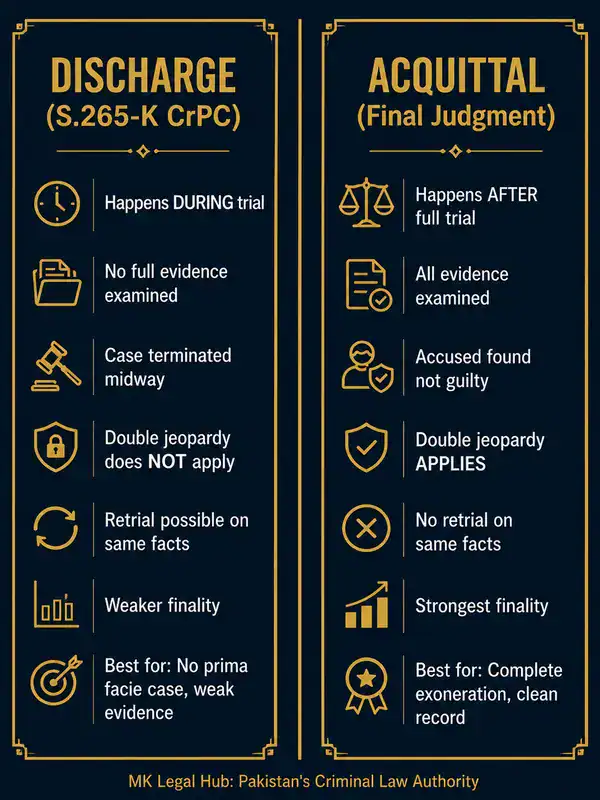
1. Side-by-Side Comparison Table: Discharge (265-K CrPC) vs Acquittal
| Factor | Discharge (S.265-K CrPC) | Acquittal (Final Judgment) |
|---|---|---|
| When It Happens | DURING trial, before judgment | AFTER full trial is complete |
| Evidence Examined | Partial: prosecution evidence only | Full: prosecution and defence evidence |
| Nature | Termination of proceedings | Finding of not guilty |
| Finality | Weaker: not a final verdict | Strongest: final judgment on merits |
| Double Jeopardy | Generally does NOT apply | APPLIES under Article 13 Constitution |
| Retrial Possible? | Yes, on same facts | No, same offence cannot be retried |
| Record Shows | "Discharged" | "Acquitted" |
| Reputation Impact | Moderate: case was stopped | Best: found innocent |
| Appeal by State | Revision/appeal possible | Appeal possible but higher standard |
| Best For | Weak prosecution evidence mid-trial | Complete exoneration and clean record |
| Speed | Faster: mid-trial termination | Slower: after entire trial |
| Ground | No sufficient ground to proceed | Prosecution failed to prove case beyond reasonable doubt |
2. What is Discharge Under Section 265-K CrPC?
Discharge is the termination of criminal proceedings against an accused during the trial, before a final judgment is delivered. Under Section 265-K of the Code of Criminal Procedure 1898, the trial court has the power to discharge the accused at any stage if it finds "no sufficient ground for proceeding." This means the court looks at the prosecution's evidence presented so far. If it finds the evidence so weak that no reasonable court could convict based on it, the court stops the trial right there. The accused is discharged. The case ends.
✅ When Discharge is Appropriate
Prosecution witnesses have given contradictory statements that collapse the case. Key prosecution witnesses have resiled (turned hostile) from their earlier statements. The documentary evidence contradicts the oral testimony. The essential ingredients of the alleged offence are missing from the evidence. The FIR has already been cancelled or quashed. Read: Discharge of Accused Complete Guide.
⚠️ What Discharge is NOT
Discharge is not a finding of innocence. It is a finding that the prosecution's case is too weak to continue. This is why a discharged accused can, in certain circumstances, face retrial if new evidence emerges. A discharged person's record shows "Discharged." An employer, bank, or immigration authority may still have questions.
3. What is Acquittal? Final Judgment Explained
Acquittal is the final judgment of a criminal court declaring the accused not guilty of the charges. It happens after a complete trial where the prosecution has presented all its evidence, the defence has had the opportunity to present its case, and the court has heard final arguments from both sides.
When a court acquits an accused, the accused is released immediately (if in custody), the criminal case is permanently closed, and under Article 13 of the Constitution of Pakistan, the accused cannot be tried again for the same offence (double jeopardy). The accused's record shows "acquitted" which is the strongest exoneration in criminal law. An honourable acquittal fully restores the accused's reputation. Read: Acquittal Complete Guide After Criminal Trial.
🌟 Honourable Acquittal
The court finds the accused completely innocent. The prosecution case was false or fabricated. The accused leaves with reputation fully intact. Best for government servants seeking reinstatement and professionals requiring licence restoration.
⚖️ Acquittal on Benefit of Doubt
The court finds the evidence insufficient but not necessarily false. The accused gets the benefit of the doubt. Still a full acquittal and protected by double jeopardy, but carries less weight for reputation matters.
4. Which Is Stronger? Discharge vs Acquittal Finality Comparison
Acquittal is significantly stronger than discharge. The difference is fundamental and has lifelong consequences.
Discharge is a procedural termination. The court says: "The prosecution has not presented enough evidence to continue this trial right now." It is not a judgment on the merits of the case. If significant new evidence emerges later, the accused can potentially be retried on the same facts (though this is rare in practice).
Acquittal is a judgment on the merits. The court says: "After examining all the evidence, this accused is not guilty." This is a final determination. Under Article 13 of the Constitution and Section 403 CrPC, the same accused cannot be tried again for the same offence. This is the constitutional protection of double jeopardy.
Practical implications: A discharged person's record shows "Discharged" while an acquitted person's record shows "Acquitted." For employers, banks, and immigration authorities, the difference is significant. An acquittal, especially honourable, provides the cleanest legal record possible.
5. Can a Discharged Accused Be Retried? Double Jeopardy Explained
This is the most critical practical difference between discharge vs acquittal in Pakistan.
📋 After Discharge
Yes, a discharged accused can potentially be retried on the same facts. Discharge does not trigger the protection of double jeopardy under Article 13 of the Constitution. If the prosecution gathers new and compelling evidence after the discharge, it can file a fresh challan and initiate a new trial. However, this is not common. Courts are cautious about permitting retrials after discharge.
🛡️ After Acquittal
No. An acquitted person enjoys the full constitutional protection of double jeopardy. Article 13 states: "No person shall be prosecuted or punished for the same offence more than once." Once a competent court has acquitted you, the State cannot file a fresh FIR, reopen investigation, or subject you to a second trial for the same offence.
Practical Advice: If you have the choice between applying for discharge or fighting for acquittal, and the evidence strongly supports your innocence, fight for acquittal. It provides permanent protection that discharge cannot. See: Complete Acquittal Guide.
6. Deadly Mistakes When Choosing Between Discharge and Acquittal
❌ Applying for Discharge Too Early
If you file for discharge before key prosecution witnesses have testified, the court will likely say: "Let the evidence come first." Wait until the prosecution's case has unfolded and its weaknesses are visible.
❌ Confusing Discharge with Acquittal in Job Applications
"Discharged" means the case was stopped. "Acquitted" means you were found not guilty. For background checks, acquittal is far stronger. Always specify "acquitted" if that is your status.
❌ Not Challenging a Discharge Refusal
If the trial court refuses your discharge application under Section 265-K CrPC, you have the right to challenge that refusal through revision in the Sessions Court or a constitutional petition in the High Court. Do not simply accept the refusal.
❌ Not Understanding Double Jeopardy
Many accused celebrate a discharge thinking they can never be tried again. This is legally incorrect. Only acquittal provides double jeopardy protection. Know the difference.
❌ Not Hiring an Experienced Trial Lawyer
Both discharge applications and acquittal arguments require skilled courtroom advocacy. A lawyer who understands when to apply for discharge and when to push for acquittal can change the outcome of your case. Contact Chief Atta Ullah Baloch.
7. بریت یا ڈسچارج: عام آدمی کے لیے مکمل اردو راہنما
جب آپ کا فوجداری ٹرائل جاری ہو اور استغاثہ کے ثبوت کمزور ہوں تو آپ کے وکیل کے پاس دو راستے ہیں: ڈسچارج (دفعہ 265-K) کی درخواست دینا یا آخر تک لڑ کر بریت (Acquittal) حاصل کرنا۔
ڈسچارج کا مطلب
ڈسچارج ٹرائل کو درمیان میں ختم کرتا ہے۔ عدالت کہتی ہے کہ استغاثہ کے پاس آگے بڑھنے کے لیے کافی ثبوت نہیں۔ یہ تیز راستہ ہے لیکن اس میں ایک خامی ہے: ڈسچارج شدہ شخص پر انہی حقائق پر دوبارہ مقدمہ چلایا جا سکتا ہے۔
بریت کا مطلب
بریت مکمل ٹرائل کے بعد حتمی فیصلہ ہے۔ عدالت کہتی ہے کہ ملزم بے قصور ہے۔ یہ زیادہ مضبوط ہے کیونکہ آئین کے آرٹیکل 13 کے تحت بری شخص پر دوبارہ اسی جرم میں مقدمہ نہیں چل سکتا۔
عام آدمی کے لیے آسان مشورہ
- اگر استغاثہ کا مقدمہ ٹرائل کے دوران ہی ٹوٹ رہا ہو تو ڈسچارج کی درخواست دیں
- اگر آپ کے پاس مضبوط دفاعی ثبوت ہیں اور مستقل بریت چاہتے ہیں تو بریت کے لیے لڑیں
- دونوں صورتوں میں کسی تجربہ کار ٹرائل وکیل سے مشورہ کریں
- ڈسچارج کو بریت نہ سمجھیں: دونوں کے قانونی اثرات مختلف ہیں
8. Frequently Asked Questions: Discharge vs Acquittal in Pakistan
Q1: What is the main difference between discharge and acquittal in Pakistan? +
Discharge happens during trial when the court stops proceedings due to insufficient evidence. Acquittal happens after a full trial when the court finds the accused not guilty. Acquittal is stronger and triggers double jeopardy protection under Article 13 of the Constitution.
Q2: Can a discharged person be retried? +
Yes. Discharge does not trigger double jeopardy. If the prosecution obtains new evidence after discharge, a retrial is possible. However, courts are cautious about permitting this.
Q3: Is discharge the same as acquittal on job applications? +
No. "Discharged" means the case was stopped. "Acquitted" means you were found not guilty. For background checks, acquittal is far stronger. Always specify "acquitted" if that is your status.
Q4: Can I apply for discharge after charges are framed? +
Yes. Section 265-K CrPC allows discharge at any stage before judgment. Even after charges are framed, if the prosecution's evidence collapses during trial, discharge can be granted.
Q5: Does discharge affect my criminal record? +
Yes, but differently from acquittal. Your record will show "Discharged" which indicates the case was terminated mid-trial, not that you were found innocent. Honourable acquittal is the cleanest record.
Q6: What is better for government servants: discharge or acquittal? +
Acquittal, especially honourable acquittal, is far better. Government servants acquitted honourably can seek reinstatement with back benefits. Discharge may not guarantee reinstatement.
Q7: بریت اور ڈسچارج میں کیا فرق ہے؟ +
Q8: کیا ڈسچارج کے بعد دوبارہ مقدمہ چل سکتا ہے؟ +
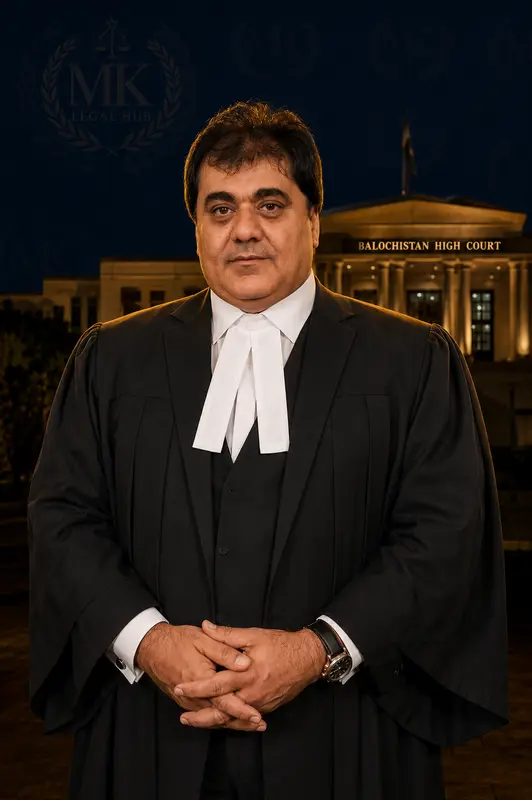
Chief Atta Ullah Baloch
Senior Advocate High Court · 25+ Years · Quetta & Mastung
"In my 25 years defending clients in Balochistan's trial courts, I have learned that timing is everything. Discharge and acquittal are both victories, but they are not equal. I have seen clients accept discharge when they could have fought for honourable acquittal, only to face problems later with employment and travel because their record showed 'discharged' instead of 'acquitted.' Discharge is the right choice when the prosecution's case collapses mid-trial and you need immediate relief. But if the evidence strongly supports your innocence, push through to acquittal. The constitutional protection of double jeopardy that comes with acquittal is worth the extra time and effort."

Facing Trial? Know Whether to Apply for Discharge or Fight for Acquittal
Every decision at the trial stage matters. Whether your lawyer should apply for discharge under Section 265-K CrPC or fight through to final acquittal depends on the specific evidence in your case.
📱 WhatsApp: 03414834719 📧 Schedule Consultation